
By Blair Rynearson
With our bodies still aching from construction of the plant nursery – a result of hauling wood, sand and topsoil down hills and through rivers – it was time to visit our neighborhood home gardens. In order to facilitate communication we contacted a local woman, Chamillee, who had served as a translator for previous Yale F&ES students. Her English is a result of conversing with foreign tourists visiting an ecolodge owned by her father. Although our Sinhala is improving by the day, it is very helpful to have someone that can elevate conversations above our limited vocabulary.
Chamillee introduced us to families in the towns of Kudawa (25-50-minute walk down the road) and Pitakele (5-25 min down the same road), and explained that we wanted to learn more about their gardens. Further explaining that we were planning to create our own traditional home garden at the research station, she opened the door for a meaningful relationship to develop between the villagers and ourselves. She told them that we were hoping to learn about the species they plant, what they are used for, and how they are grown.
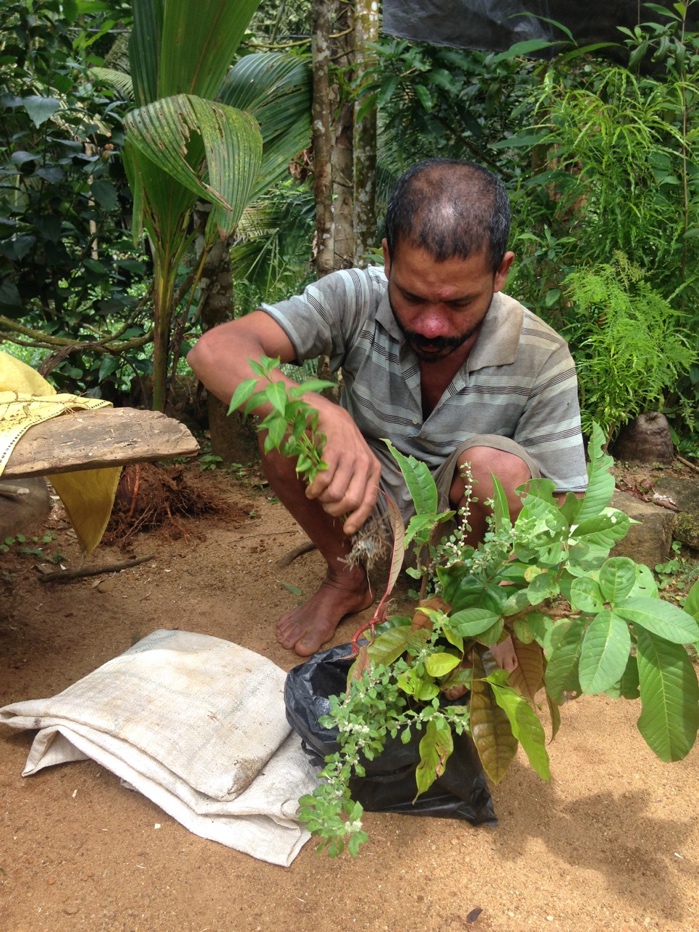
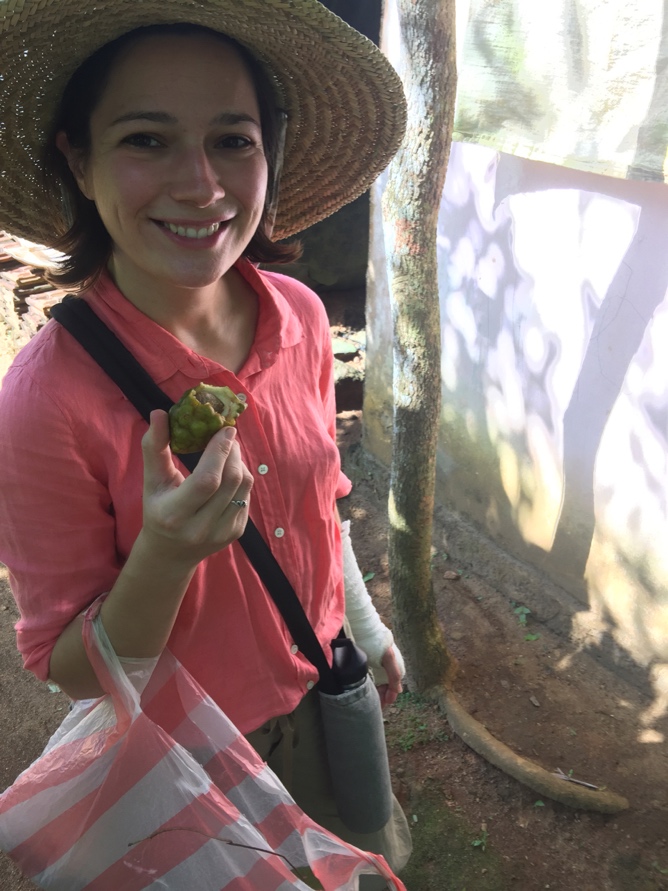
We have found the Sinhalese people to be unfailingly friendly. When they learned that we were interested in how their gardens were planted and managed, this trait was amplified. They volunteered hours of their time, walking us through their properties (Fig. 1), fielding our questions and offering us tea and produce from their backyards. We would point to a tree with fruit, and they would tell us the name, how it was planted, and give us some fruit to try (it’s a tough job, but somebody has to do it). We were then instructed to save the seeds, and were given specific instructions on how to plant them.
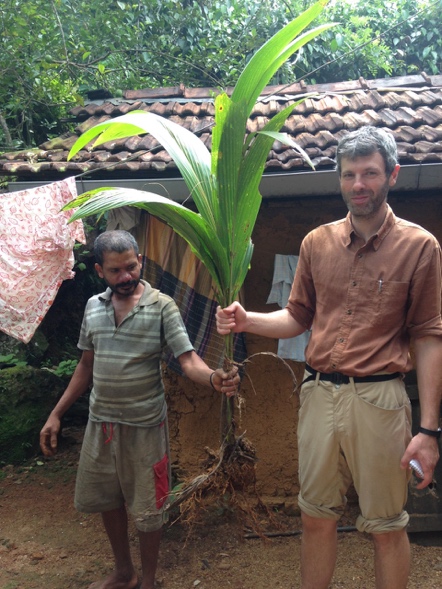
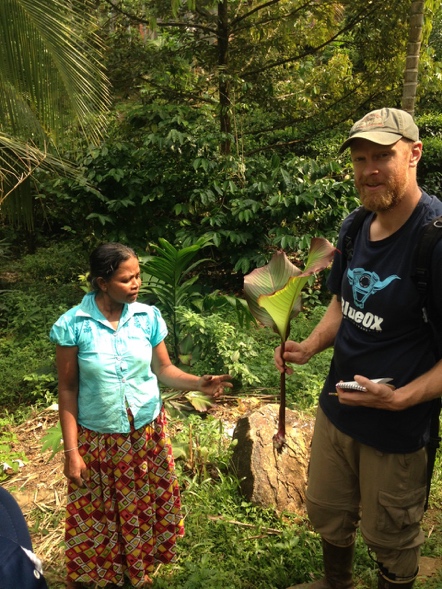
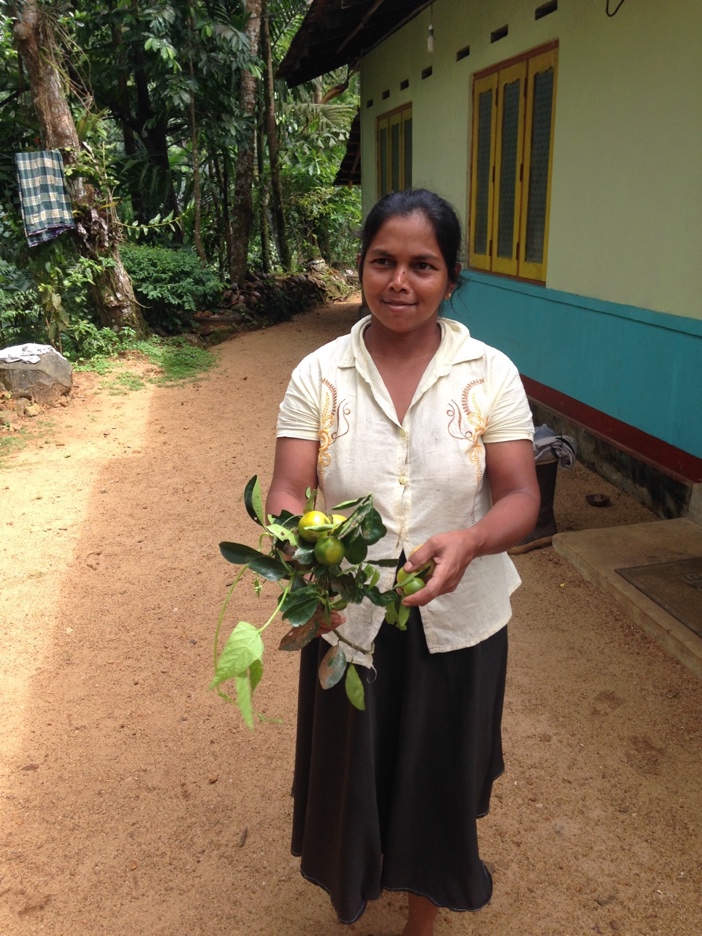
They told us about various plants used in Ayurvedic medicine for snake bites, healing bones, indigestion, stomach bugs, headaches, eye problems, infections, and the list goes on. Within fifty yards of their house is a well-stocked pharmacy! Interspersed with the medicine is a complete spice cabinet: turmeric, ginger, cardamom, black pepper, vanilla, chili, garlic and more (Fig. 2). And let’s not forget the produce department: yams, sweet potatoes, squash, cucumbers, manioc, beans, various types of curry plants, and salad leaves of a greater diversity than I have seen at any American farmer’s market. Fruits are plentiful: coconut, mango, avocado, guava, soursop, custard apple, mangosteen, rambutan, jakfruit, breadfruit, lemon, lime, papaya, and more! To top it all off, they have their own lumber yard. There are abundant timber species, mostly native, with some well-known exotics like mahogany and teak.
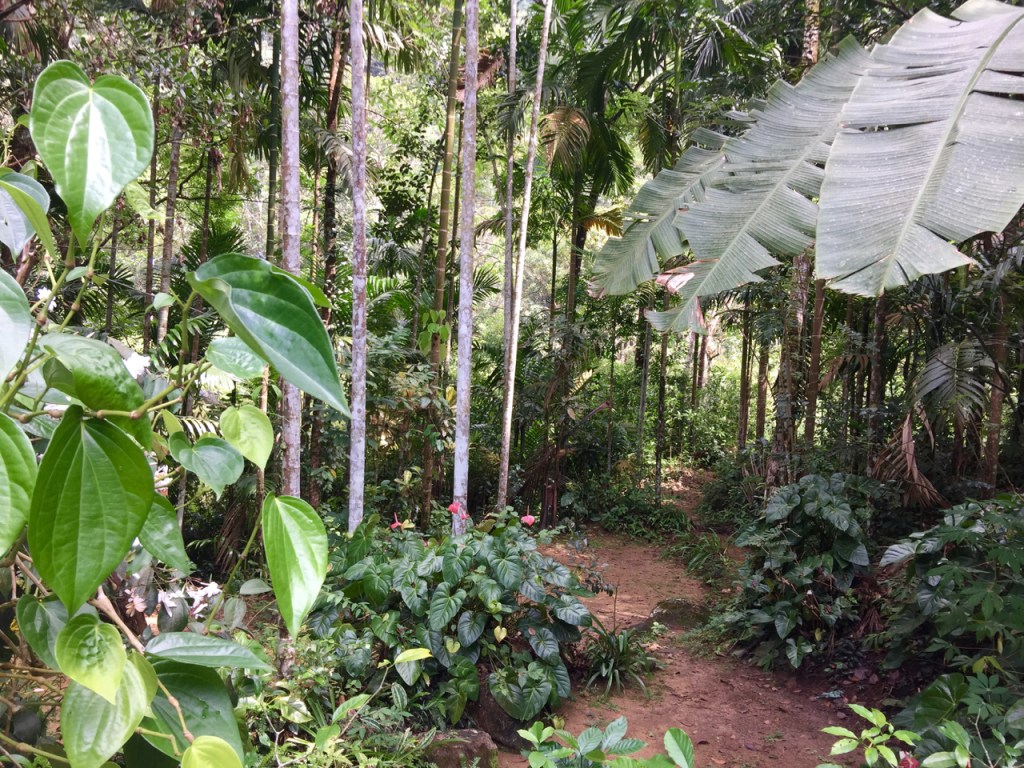
We are impressed to find that your average villager can identify hundreds of plant species, their various uses, and how they are grown. Most everyone, it would seem, is a storehouse of intrinsic knowledge. It’s daunting to think that our task is to recreate a traditional home garden designed by what we perceive to be highly specialized horticulturalists and landscape architects. There is much work to be done on trying to learn why, where, and how to plant the hundreds of species that we will collect. It has become apparent that eight months is too short a time to scratch the surface of understanding the complexity of Sinharaja area home gardens… but try, we will.
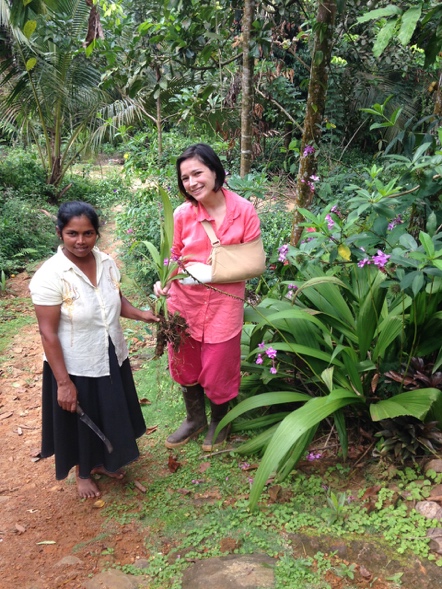
Thankfully, the local gardeners are more than happy to support us. They fill our bags with seeds, clippings and bare root seedlings of species that they insist must be included in any self-respecting home garden (Fig. 3). Logan started asking farmers about their favorite plants, which led to discovering what some villagers find to be their most useful or unusual varieties of common plants. After a mere three days of visiting home gardens, we’ve planted close to forty species in our fledgling nursery!
Update 12/22/2016:
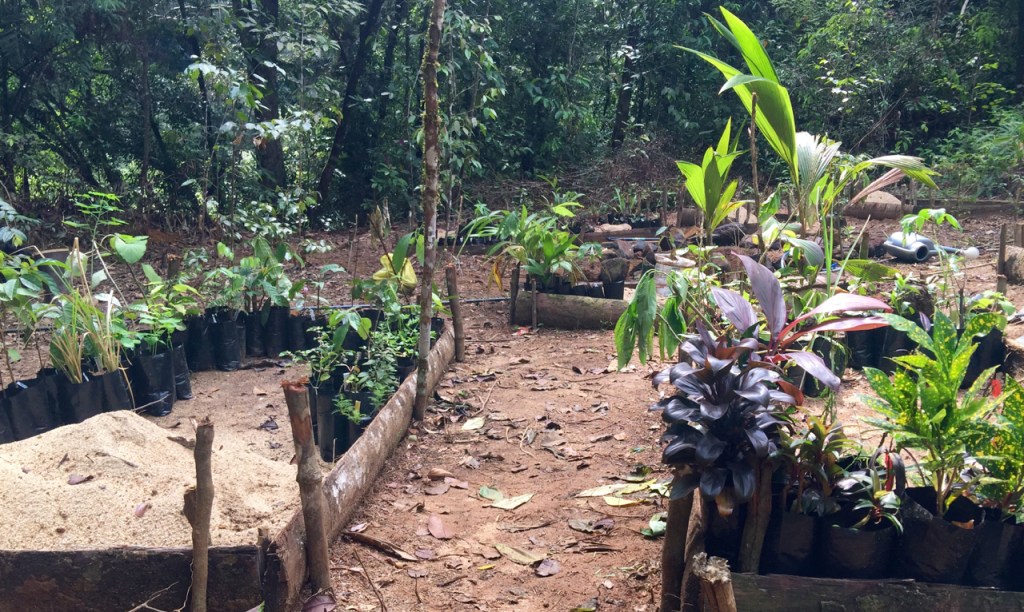
After more than three weeks of visiting home gardens, our collection of plants is starting to resemble a proper nursery (Fig. 4). We have amassed between four and five hundred individual plants, of more than eighty species. As the tropical conditions of Sinharaja are forgiving, the survival rate of our plantings is shockingly high. Most samples are collected as bare root seedlings or cuttings that are somewhat crudely placed in polybags filled with a mixture of organic topsoil and sand. We have followed the lead of knowledgeable locals and used no root hormone or inorganic fertilizer. The only time we water the plants is when it doesn’t rain, which seems to be an infrequent occurrence!
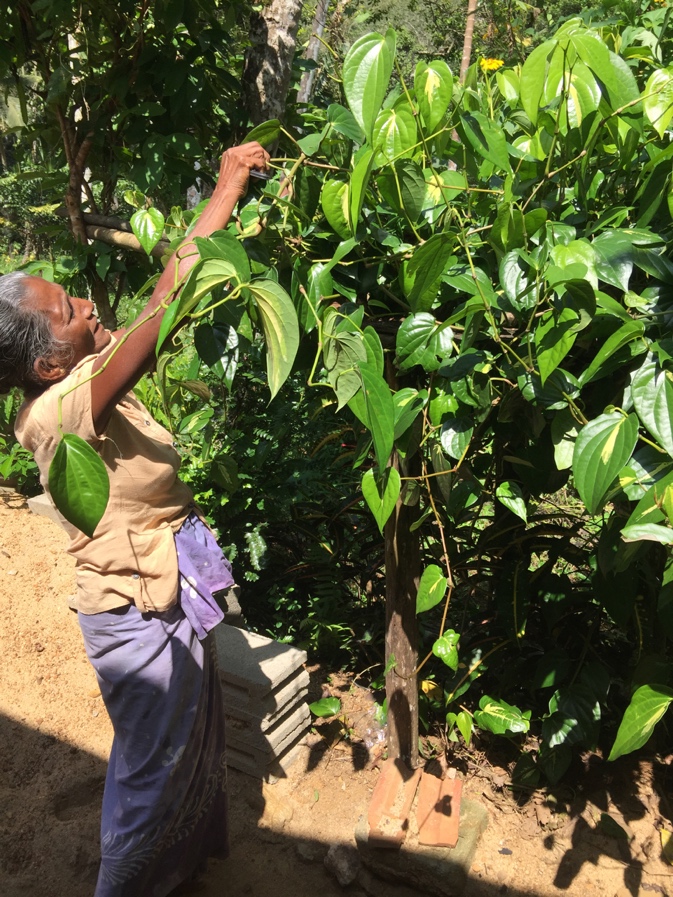
The largest casualty incurred thus far was the result of a friendly visit by a neighboring pack of wild boar. They did a number on our coconut, banana and tubers, but security measures have been stepped up and future incursions seem unlikely (more information to come in an upcoming blog). We have replicate plants of many of the most essential home garden species and continue to acquire interesting and new varieties of plants (Fig. 5). With every visit we are learning more about what should be planted first, and are getting a feel for ideal site conditions for individual species.
An update by Laura Luttrell January 7, 2017
As of January 7, we have visited and collected plants at 47 local homegardens! In order to facilitate communication we employed a small number of local friends with varying degrees of English speaking ability throughout this time. It has been very helpful to have someone along that can translate our meanings and ease the flow of conversations, but it is also exciting that our Sinhala has now improved to the point that we are able to ask many of the questions ourselves (although that’s not to say that we understand all the responses)!
After so many interviews in the community and a lot of additional hard work with the plants, our nursery is starting to look impressive. We have amassed over 750 individual plants, and over 170 species, including what we perceive to be the core species of most homegardens and many, many, pretty flowers! Beyond the core species, we have been collecting many interesting and special plants from villagers. Having gathered some of the more unusual species from each family we visit has led to us possibly having the most diverse collection of all! The survival rate of our seedlings has been surprisingly high, mostly we think because the climate here is so perfect for growing tropical plants, but lately, we’d noticed that our seedlings were struggling to adjust to the intense afternoon sun. To give them a break, we installed shade netting over one part of the high fenced area and started moving the seedlings that needed more shade. In addition to the seedlings, we have planted 263 polybags with seeds and many of those have germinated, so our nursery is steadily expanding. Next on the agenda is to figure out where to put all these plants! We’ve been talking with villagers about appropriate spacing and growing requirements for many of the plants. Already, we’ve planted a few species directly into the ground, as they weren’t going to make it in a little polybag.
 slpfc.org