
By Laura Luttrell
In April, we celebrated the Sinhala New Year, which to our knowledge is the biggest holiday of the year. Students and teachers are off for 3 weeks at this time and the country shuts down for at least the official day while everyone spends time with their families. Typically, people go to the temple (Fig. 1) and visit their relatives – travelling to their familial village if they have moved away. In our village, we were fortunate to be invited into the families and festivities of our two closest friends here, Someratne and Tillekaratne.
The holiday, like many of ours in America, includes a mix of religious symbolism, cultural tradition, and firecrackers. The traditions in Sri Lanka are linked to astrology and most families purchase a litha, a special calendar to inform them of the auspicious moments when they are to perform certain acts. This creates an interesting dynamic where people across the country are performing rituals at the same time throughout the course of several days.

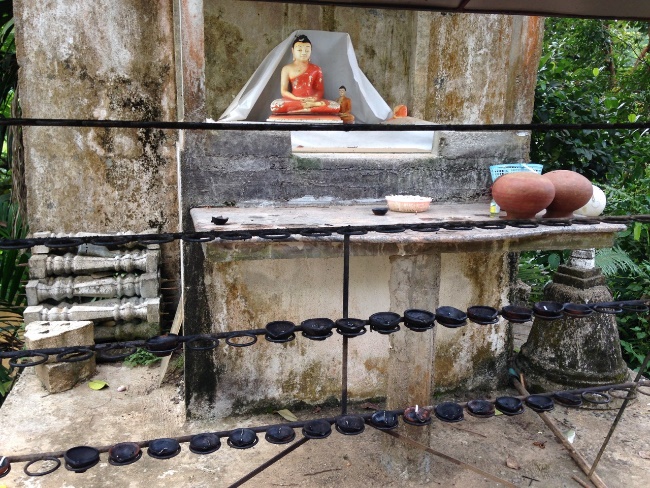
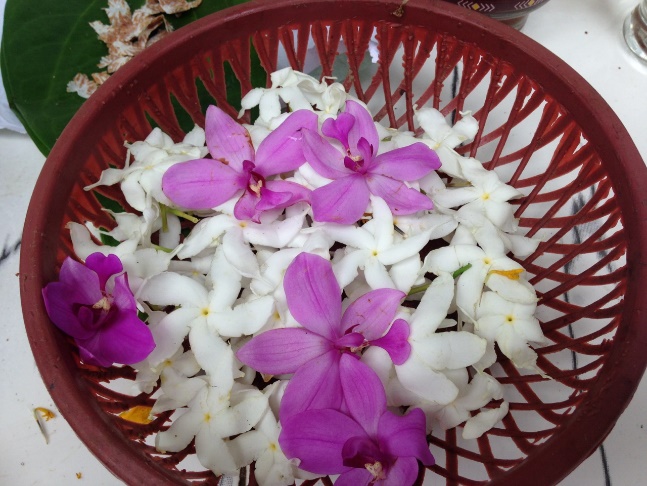
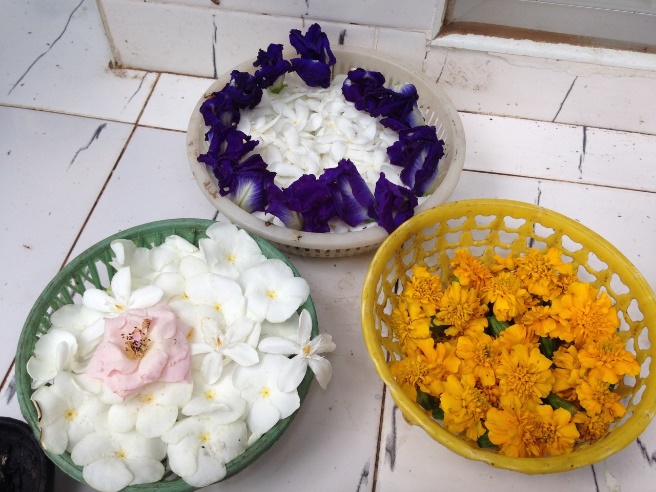
The first auspicious moment commences the holiday. At this time, everyone “lights the hearth” (lipa gini melavima). This is when they light both the cooking hearth and the altar that holds various religious elements, including incense, food offerings, lit coconut oil, and flowers.
Next is the auspicious time of cooking a meal (ahara pisima), followed by the auspicious time of eating a meal (ahara anubhawa kirima). Since these times are early in the morning, the meal is breakfast and traditionally kiribath, a salty coconut milk rice mixture. Kiribath can be made in squares or into rolls that are filled with pol pani, a coconut mixture made with kithul honey. We enjoyed eating the later type made by Tillekaratne’s wife.
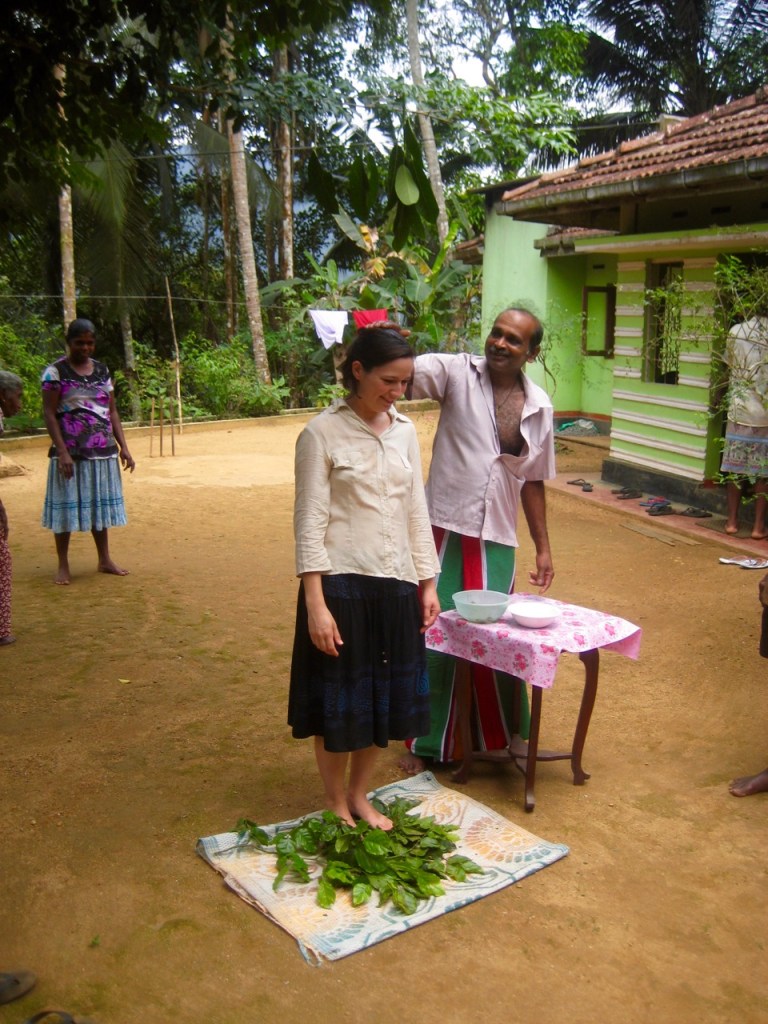
On the following day at 11:10 am, we participated in hisa tel gaema, or anointment with coconut oil (Fig. 2). We each walked over a mound of karanda leaves (Humboldtia laurifolia) as Someratne rubbed a little oil on each of our heads while leaves of the nuga tree (Ficus benghalensis) were hanging above us.
Other auspicious moments include a time to go to your place of work (this works well if you have a flexible schedule, but is not regularly practiced by those with scheduled work) and a time to bathe in order to cleanse from the old year.
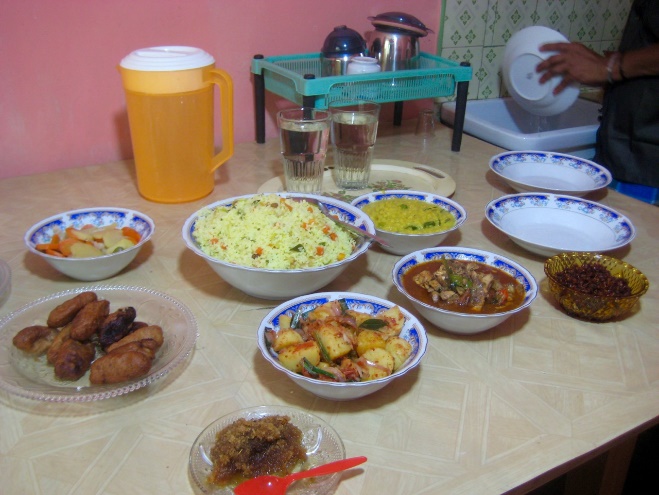
This was all intermingled with visiting relatives and eating lots of sweets and food… sounds familiar, right? We ate lunch on New Year’s Day, April 14th, at Tillekaratne’s, preceded by an abundance of tea and sweets (Fig. 3). We later made our way down to Someratne’s for a virtually identical dinner, of course preceded by tea and sweets, but this time with a little betel nut chewing as well (see Blog 7 – chewing betel). The following day, we had kiribath for breakfast at Tillekaratne’s house (with you guessed it, more tea and sweets), on our way down to visit Someratne’s wife’s family’s house. There, we had even more tea and sweets before we were anointed with oil and ate a big lunch. Whew! The eating really wore us out. We were exhausted.

In addition to the family visits, each village celebrates the New Year with a community-wide festival. We attended three! – one in Kuduwa village at the bottom of mountain where we catch the bus, one in the next village along the bus route, Weddagala, where our friend (who invited us) lives, and one in our village, Pitakele, in that order over the course of a few weeks.
Each festival was similar in that they consisted of a stage with an announcer, who talked nearly the entire time, a ceremony with singing and dancing, snack vendors, and lots of games.
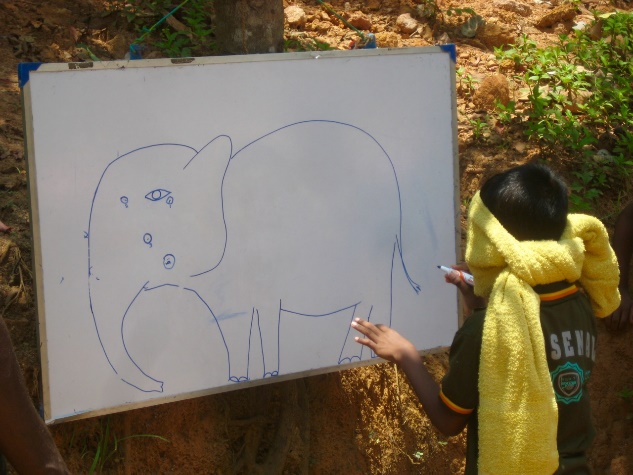
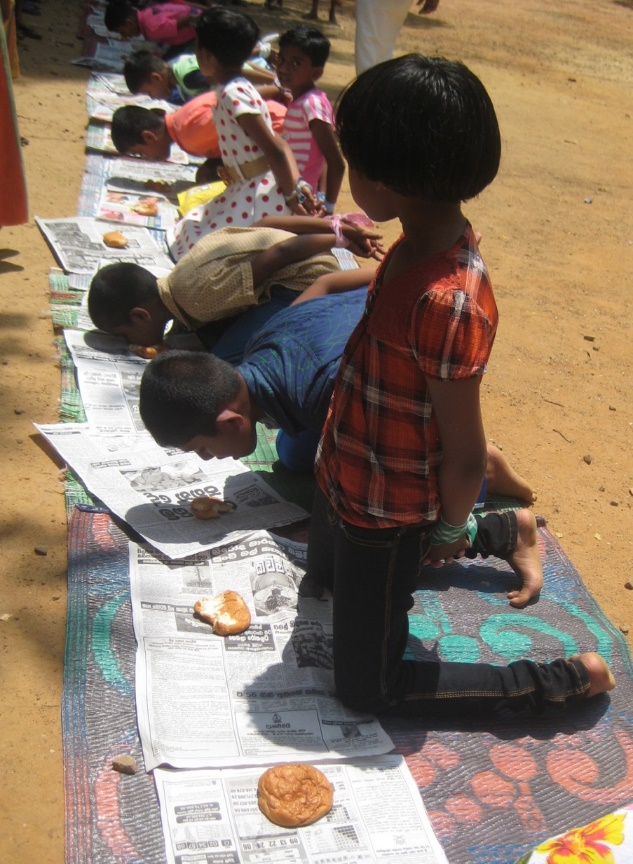
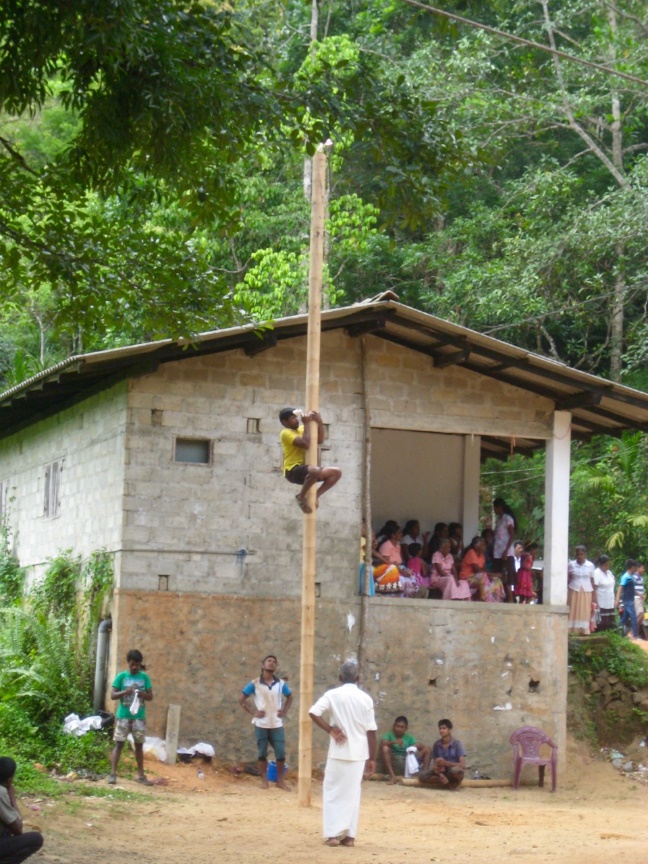
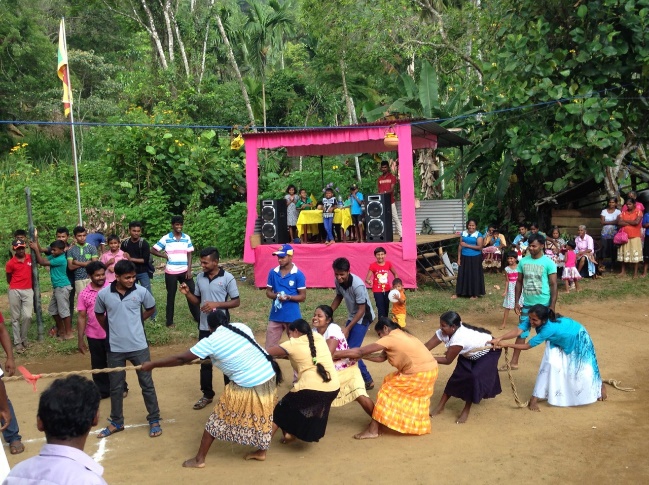
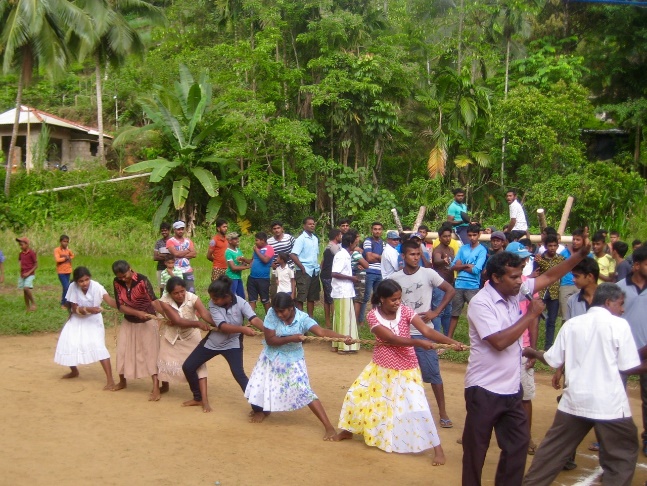
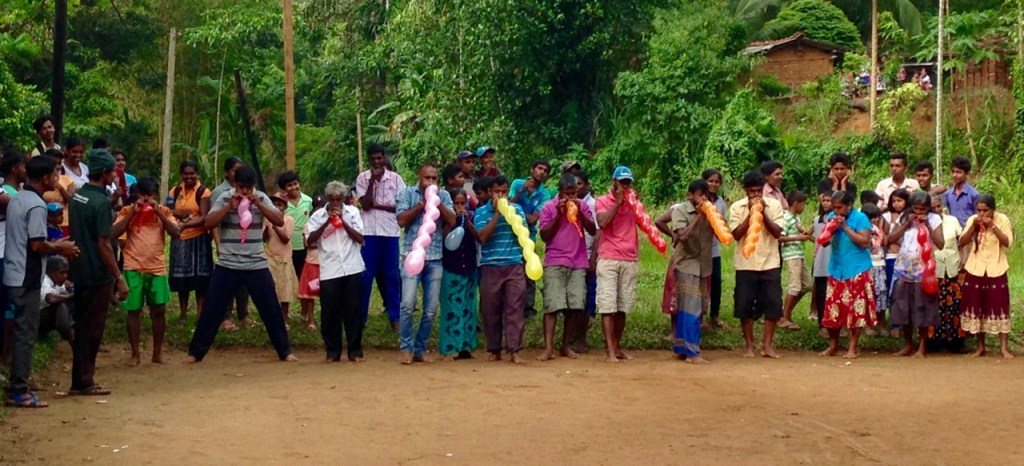
Games were the main attraction, filling the entire day from morning till dark (See the photograph montage at the end). They included races for all ages, a greasy bamboo pole climb, a frighteningly intense pillow-fight competition, a piñata type game that had milk in one of three ceramic hanging bowls, a bread eating contest, balloon blowing contests, threading a needle relay, draw the eye on the elephant (like pin the tail on the donkey), balancing a coin while standing on one leg, egg toss, guess the number of seeds in a papaya/pumpkin, walk the bamboo plank to retrieve a flag, hot potato, three-legged race, and the obligatory tug of war contests.
We were encouraged to participate in the games, but seeing as how we were already quite a spectacle, we didn’t choose to make ourselves anymore noticeable at the first festival. At the second festival, we were invited to sit on the stage, so we were pretty noticeable by then and we agreed to hand out some prizes. We finally gave in when we attended the festival in our own village. In Pitakele, we played a game where the whole community went around in a circle and when the music stopped, a number was called out and we had to get together in groups of that number. If you weren’t in a group of that number, you were out. It was kind of like musical chairs. Fun and simple. We also made a guess at how many seeds were in the pumpkin (we were way off!) But the participation that will be remembered is when Logan and Blair put all their strength up against the other men of the village… For weeks before the big day, we (mostly Blair) were asked to join in on a local tug of war team. We quickly realized that this was a really big deal in the community and eventually on the day of the event, they agreed to play. There were tug of wars for children, for women, and for men. The men had several teams and competed tournament style. It was intense! In the end, Blair and Logan’s team did great, coming in 2nd place, even pulling off an upset tiebreaker from the slippery side of the court! The men who won were by far the burliest men of the village and we didn’t think it would be right to bring down the village confidence in their supreme strength by beating them (post-justification)… Villagers were commenting on Logan and Blair’s performance for days following the festival and we are sure that their efforts will be talked about for years to come.
It was an exhausting time for us, but certainly the most we’ve engaged in the happenings of the community and an interesting insight to the Sri Lankan holiday season.

 slpfc.org