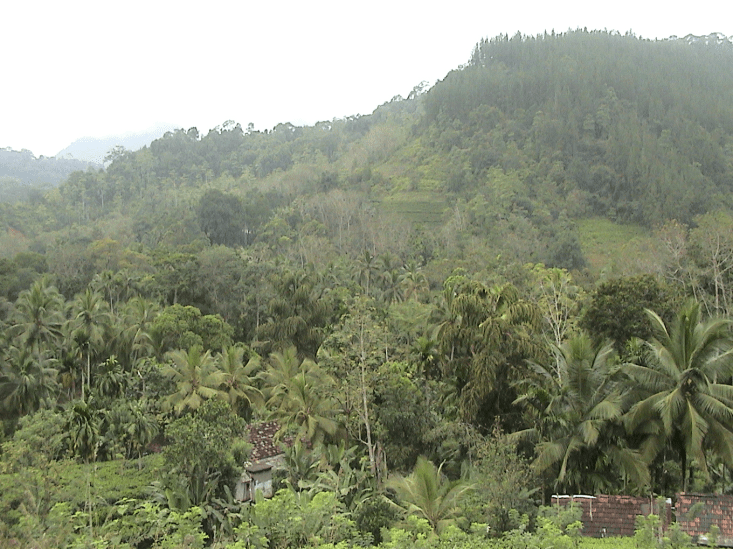
The Sri Lanka Program for Forest Conservation (SLPFC) is devoted to research, education and extension of tropical forest conservation in Southwest Sri Lanka. It has several endowed programs that enable faculty, doctoral, masters and undergraduate students from the Universities of Sri Jayewardenepura, Peradeniya, Uva Wellassa and Yale (USA) to study tropical forest conservation at the SLPFC field station located in the village of Pitekele (Fig. 1a) and the adjacent Sinharaja MAB World Heritage Forest (Fig. 1b).
A 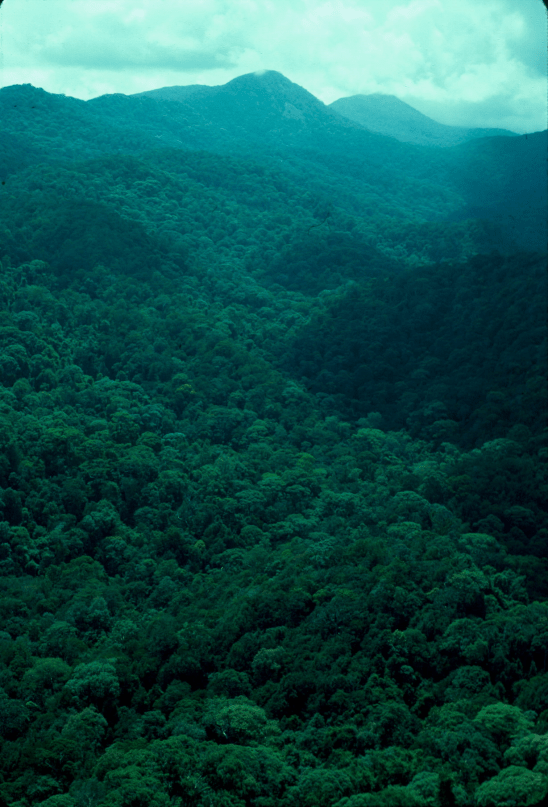
B
Figure 1 a. A view of the village of Pitekele and their tree gardens, tea and rice cultivation. The field station is located at the top of the valley adjacent to the rain forest (in the left background of this photo) with the village downstream following the river and valley. 1 b. A View of the adjacent Sinharaja Rain forest – a World Heritage Site and Man and the Biosphere Reserve
Last year was the inaugural year for the F&ES masters graduate fellowship program with Logan Sander MF ’16, Laura Lutrell, and Blair Rynearson MF ‘ 16. This year three F&ES ’17 graduates were awarded postgraduate fellowships to work in the Sinharaja and Pitekele village: Juliana Hanle, Chandni Navalkha and Luke Menard. Their bios are provided below. Fellows will be providing weekly blogs of their adventures. If you would like to know more about the program or to receive these blogs please make sure to notify Mark S. Ashton (mark.ashton@yale.edu).

Juliana Hanle: I graduated from F&ES in 2017 with a Masters of Forestry and a BA from Yale College in 2013, studying history and non-fiction writing. I was a 2013-2014 Fulbright research grantee to Norway. At F&ES I worked as a Science Communication Fellow for the Yale Institute of Biospheric Studies and researched bird use of timber harvests at Yale-Myers forest. I will be following multi-species bird flock use of Pitakele home gardens, relating bird use to structure and composition to quantify the conservation value of this land use. I look forward to learning from our neighbors in Sri Lanka and following bird use of homegardens.
Chandni Navalkha: I recently completed my M.ESc. at F&ES, where I worked on the social and political ecology of conservation. As an environmental professional who hopes to contribute to the long-term protection of human-environment relationships, I use methods and insights from the social sciences to think about conservation and sustainable development strategies that respect peoples’ right to self-determination. I have conducted research on community conserved areas in Mexico, strategies to address the challenges faced by communities living within protected areas in Nicaragua and Honduras, and the sociocultural links between people and plants in the Peruvian Amazon. Using my background, I also hope to play a role in the development of digital tools to support conservation through information and education.
In Sri Lanka, I will follow up on a 23-year old study of Pitekele village conducted by F&ES alum Cindy Caron MFS’ 93 to understand local people’s use of forest resources and their role in villagers’ livelihoods. Alongside this project, I aim to create a digital resource through which students, researchers, and natural resource management professionals can explore and learn about the beautiful plants, trees, and people she is surrounded by in the Sinharaja World Heritage Site.
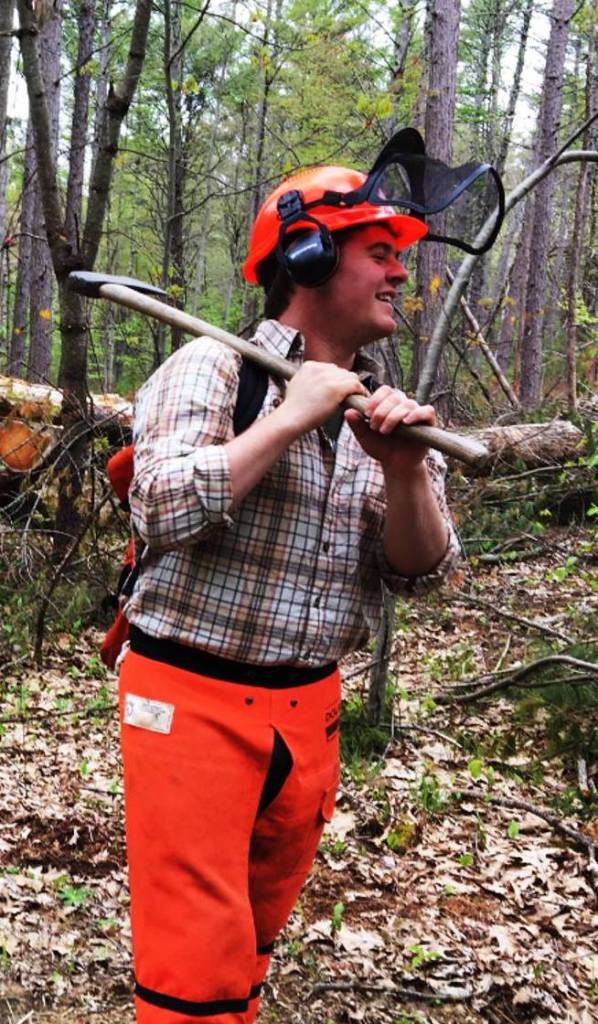
Luke Menard: I was raised in Western Massachusetts. I received a B.A. in Environmental Studies from Amherst College in 2012 and a Masters in Environmental Management from the Yale School of Forestry and Environmental Studies in 2017. At F&ES, I focused on gaining the skillset necessary to become a more effective leader in working and wild land conservation and management. As a result, my work and studies centered on forestry, geospatial analysis, western land management, and conservation finance. I have a background in environmental health and science communications and environmental education, and have conducted research in tropical field ecology and rainforest management in the Wet Tropical Rainforest of Australia. As a fellow, I hope to merge these experiences, both gaining knowledge and practice in forest conservation and natural resource management and communicating what I learn via usable guides, digital tools, and interactive maps to the broader Yale and scientific communities.
 slpfc.org