
By Chandni Navalkha
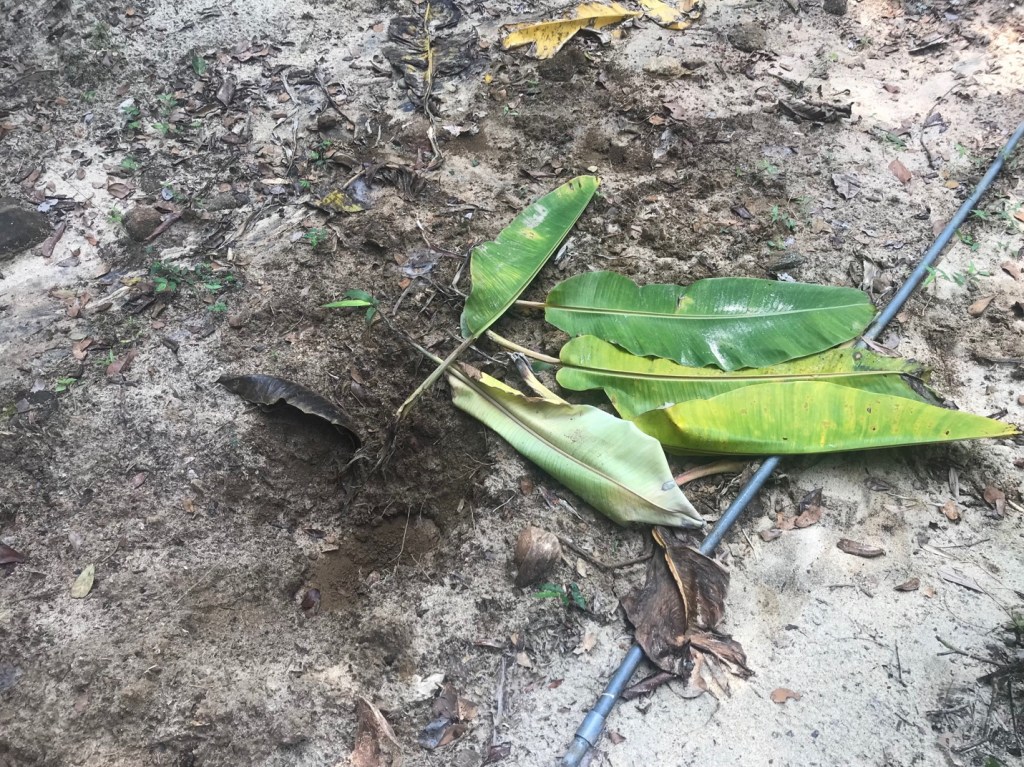
We have finished our inventory of plants! We now will begin to gather plants that we will need to replace, to figure out which sites in the home garden didn’t work well and how to ameliorate them, and to choose what plants we want to add in zones 1, 2, and 3. Now that the rain has ended and a new year has started, it’s time to get plants in the polybags full of fresh soil waiting in the new nursery beds (Fig. 1).

While much of our attention over the past two months has been trained on the home garden demonstration site, the daily lives of the villagers here in Pitekele have gone on around us. Our basic Sinhala, very much a work in progress, was one impediment to being able to converse with people to learn more about where we are and who our neighbors are. In the beginning, walking along Pitekele road, villagers would often assume I was Sri Lankan and address me in rapid Sinhala; now that they know me better, they speak more slowly! In addition to improving my Sinhala, I was able to find someone to help translate for me – Suranga, who works at an ecolodge nearby and who has been instrumental in allowing me to begin to understand the lives and livelihoods of people in Pitekele. The home garden that we fellows are helping to create at the field station is, after all, based largely on villagers’ experimentation, histories, practical knowledge, and generosity with their time and their plants. Whenever we stop by someone’s house, we are sure to walk away full of sweet tea and with a shoot of black pepper to pop into a polybag in the nursery or some small pink pini jambu to eat.
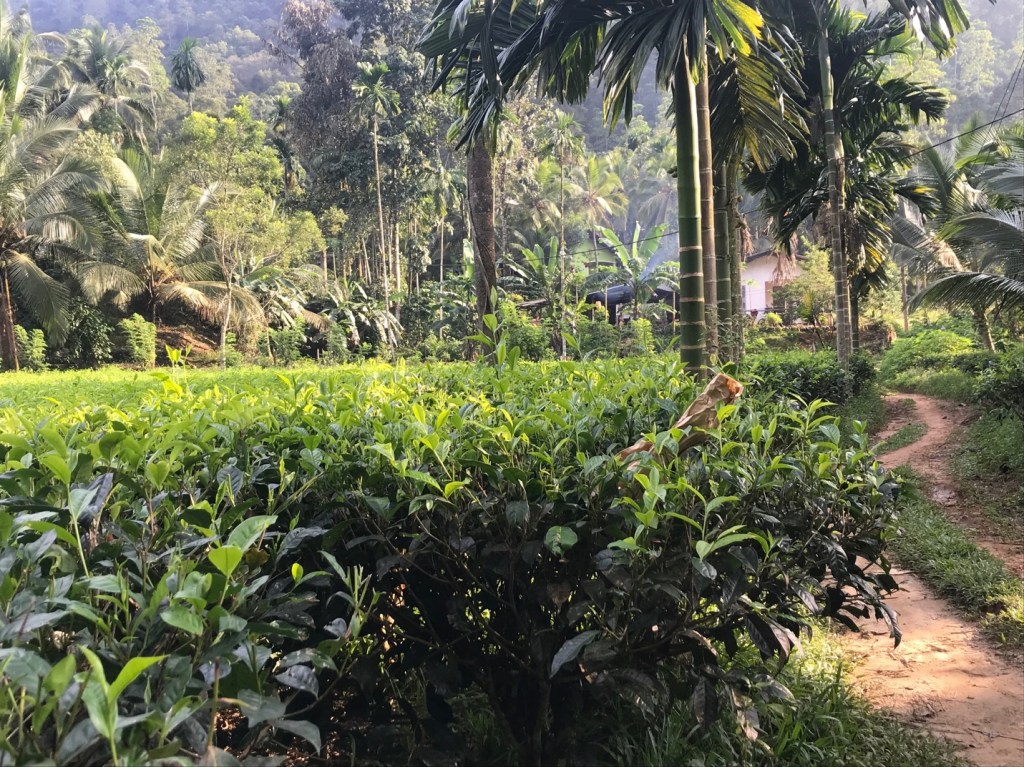
Pitekele is an old village as far as villages in the lowland rainforest of Sri Lanka go – many of the families I have spoken with are the fourth generation to live here. The original village began with just three or four families, who cultivated rice and practiced shifting cultivation (known as chena in Sri Lanka, illegal since the early 20th century); now, there are 32 families and most make their income from cultivating low-grown tea (Fig. 2) and from tapping the fish-tail palm (kithul) to produce jaggery. One of our neighbors shared a music video starring her husband about the role of kithul tapping in villagers’ lives: you can watch the video on YouTube by copying this address into your web browser: https://www.youtube.com/watch?v=x0vV8CYMvQQ
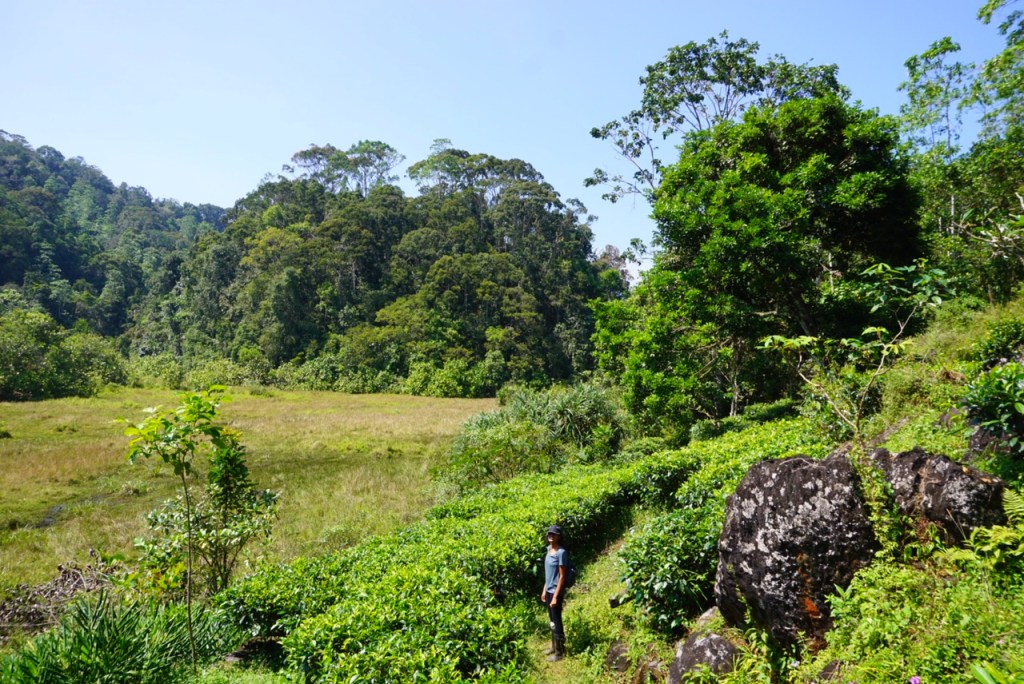
Generally, people here no longer cultivate rice, partially because their share of the limited paddy land is small (land is shared between numerous family members who have rotating cultivation rights) and partially because it is difficult to keep predators like wild boar (ura) and elk (gona) away. There are now heavy fines for killing or trapping these creatures. Several people have told me that part of the reason tea cultivation has become more important is that animals are not a threat to tea plants! One villager attributed the animal problem to changes in the surrounding forest: previously, he said, there were “little forests” and “thick forests” within what is the protected area of Sinharaja and its buffer zone, and the “little forests” full of nutritious species were frequented by animals. Now, he observes that these “little forests” are disappearing and that animals are searching out food in human dominated areas instead (Fig. 3). It would be interesting to investigate this theory further.
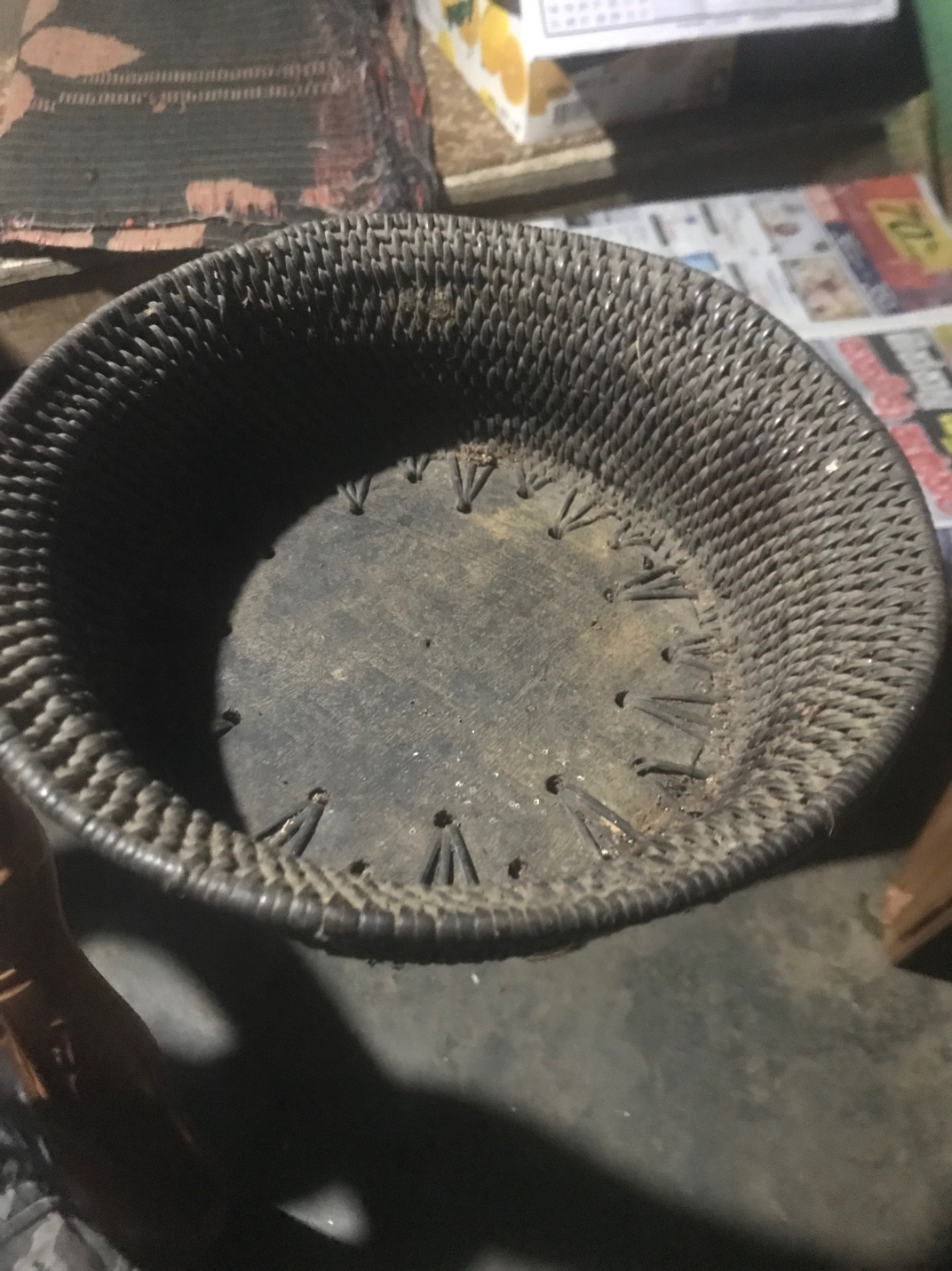
One of the most interesting conversations I had was about the traditions or ethics (kem) of rice farming as it used to be practiced in Pitekele, with a villager who stopped growing rice just 2 years ago. To keep animals away, he said, one would build a small treehouse or “watch-house” overlooking the paddy field and would spend the night keeping an eye out for predators. People would look forward to this time in the watch-house, where they would pass the hours by singing and making up four line poems (pelkawi). When working in the paddy, it was strictly forbidden to speak when undertaking certain activities to ensure the harvest was successful. Villagers measured harvests through a traditional measurement system known as busala. A woven basket of cane filled to the brim with raw rice was known as a laha (Fig. 4); 10 laha is 1 busal, basically enough rice to fill a 50kg bag. In the rice country of Sri Lanka, planting out one busal of rice yields 50 busala, but near Sinharaja, it yields just 12 busala. Low yields are also part of the reason people have moved on to other sources for their livelihoods (Fig. 5).
It may seem strange to be writing about rice in a blog about developing an experimental home garden, but it is partially because of the shift away from rice that villagers’ home gardens have become even more important as a source of food and nutrition. While some people gather beraliya (a nut used to make sweet snacks) from the nearby forest, it is now illegal for them to gather most foodstuffs from Sinharaja (with which Pitekele shares a border) and the fines and penalties are prohibitive. Home gardens in Pitekele seem to be shaped not only by villagers’ aesthetic and culinary preferences but also by the changing cultural context. This is what I am particularly interested in, and hope to learn more about over the next few months as I visit individual home gardens to understand what species are present and how they complement villagers’ livelihoods.
My interactions with people in Pitekele are illuminating and often confusing, but I am enjoying the process of attempting to get a better picture of our surroundings. Hopefully this process will help to situate our evolving home garden within the larger landscape of people and home gardens in which we are taking part.
 slpfc.org