
By Chandni Navalkha
We get around a lot of ways here in Sinharaja – via tuktuks, three-wheeled vehicles imported from India; on scooters or motorcycles driven expertly by friends; and most often, by foot. Perhaps my favorite mode of transportation is travelling in the back of a tea lorry, cramped amongst sacks of fresh green tea leaves, bags of rice and vegetables, children coming home from school in miraculously white uniforms, and tea pickers and planters catching a ride to their homes (Fig. 1).
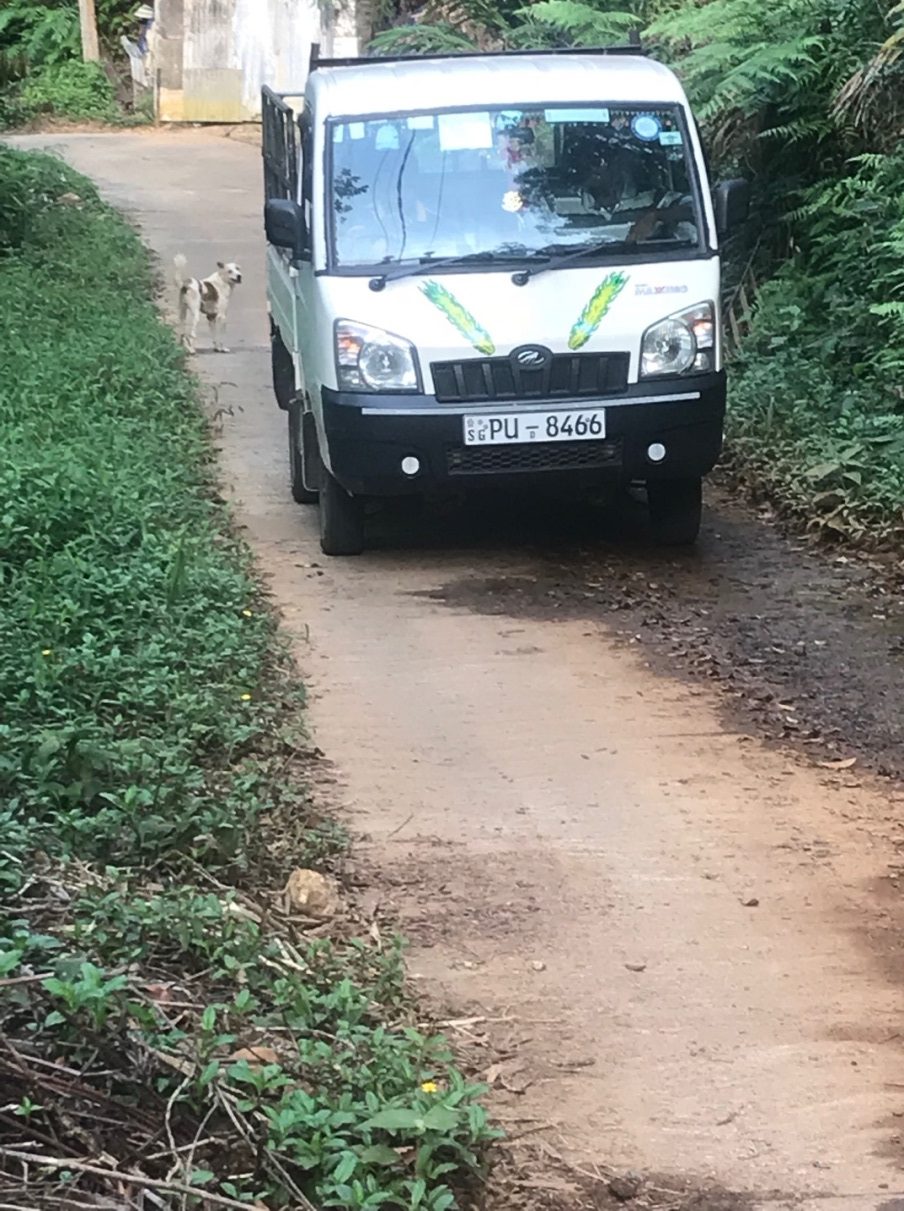
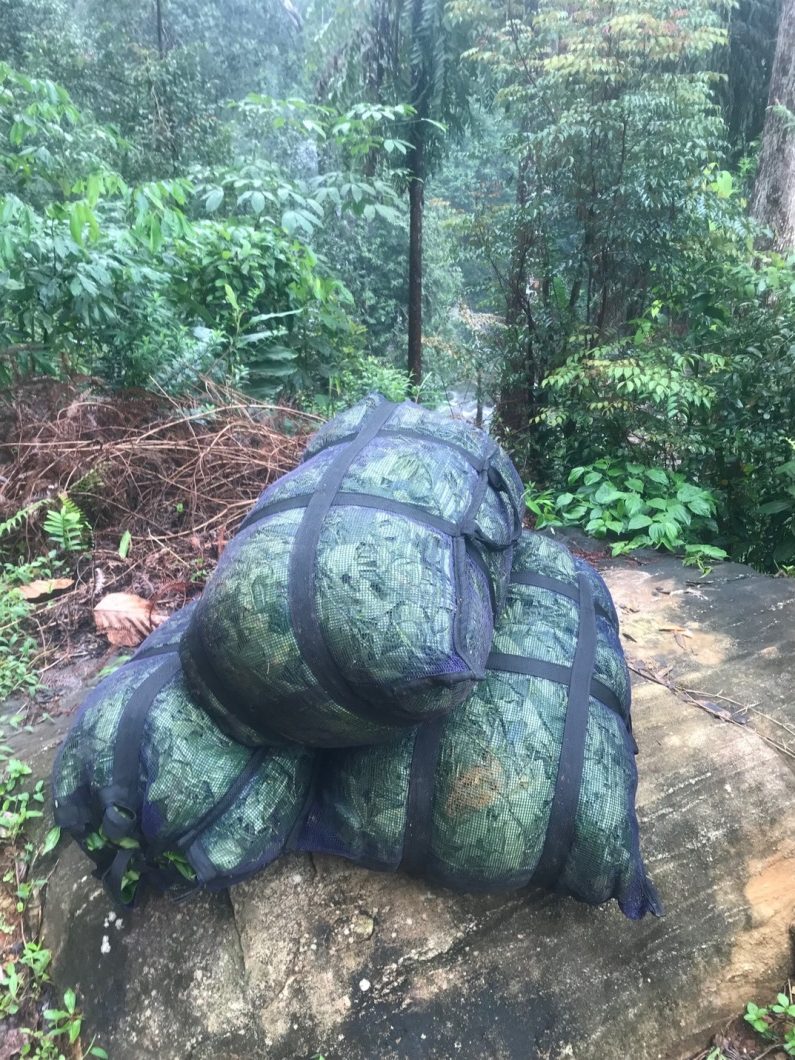
Lorries are the lifeblood of the village. Daily, they travel from the tea factories nearby (Ceciliyan and Kukuleganga) to Pitekele to transport hundreds of kilograms of tea picked by villagers (Fig. 2). On the front corner of their windows is posted the daily price of low-grown young tea leaves – it has ranged from 102 to 104 rupees per kilo since we have been here. This number represents, in many ways, the economic well-being of the majority of people in the village. Years ago, during what is referred to as the ‘collapse,’ the price of tea fell to 50 rupees per kilo, leaving villagers struggling to meet their basic needs. News about tea prices spreads rapidly; when Russia, the main importer of Ceylon tea, temporarily restricted imports of Sri Lankan tea in December 2017 because of a beetle found in a tea consignment, everyone in the village was worried about the potential impacts on their incomes. Luckily, the ban was lifted by the end of the year.
Villagers reference the road to Pitekele as the major positive change in the quality of their lives over the past 25 years. Before, it was an unpaved footpath. To build houses in the village, people came on foot carrying construction materials from Weddagala, 6 km away. Now they have 2 kilometers of good road, cobblestoned in some sections, which reaches Pitekele’s newly established volleyball court (the pickup point for most people’s 25kg bags of tea leaves). It is an outcome of a concerted effort by the Sri Lankan government, via the Tea Smallholders Association, to encourage smallholder tea plantations in part by setting up the infrastructure – roads and lorries – to support them. The ease of getting tea to market is one reason why now, nearly every villager in Pitekele produces tea; in 1980, before the road was built, there were only two families who grew tea here.
But the tea lorries transport more than just tea. There is no bus from the closest town to Pitekele. People who sell their tea to particular lorry-men or tea factories get to catch rides for themselves or their children on those tea lorries when they go to and from the village. Instead of growing their own rice (the staple grain in Sri Lankan diets) or purchasing heavy bags of white or red rice (most people require more than 25kg of rice in a month) in town, tea planters exchange their tea leaves for rice with the lorry drivers; they simply tell the lorry driver how much they need, and he brings the rice and deducts the cost from the payment he gives to the tea planter each month. If people need to transport large or bulky items from town, the tea lorry will bring it to Pitekele for a small fee. This is how we got our 50kg of compost from town to the village!
The social and economic role of the lorries is immense, and they are just one example of the ways in which tea infrastructure is interwoven with daily life in Pitekele. Now that Luke has begun to establish a tea plantation within the home garden, our field station too will become part of this web.
 slpfc.org