
By Chandni Navalkha
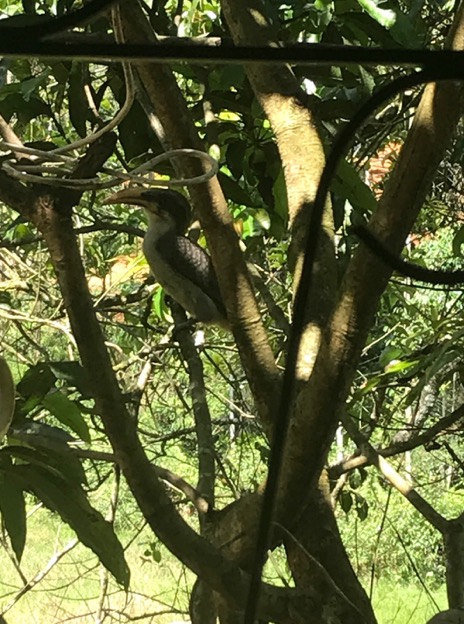
My days at the field station have passed quickly, taken up by visits to Pitekele’s households. Each morning I walk along the village’s main road, hearing the rustling of the huge water monitor in the tea plantation across the footbridge and listening to the purple faced leaf monkeys twitter as I pass. I stop in at people’s houses to say a quick hello and am often given tea and a snack for the way – curd and kithul syrup, rice cooked in coconut milk and stuffed with sweet kithul jaggery, fried wafers covered in grains of sugar, sticky pudding wrapped in a kenda leaf. People gift me fruits from their gardens – a soursop the size of my head, bunches of bananas, green papayas to ripen, tannic weralu (which looks like olives), and once a 2-kilo bag of a fruit called ambarella, which turns into a delicious sweet-and-sour dish when curried. In greeting, villagers don’t ask how you are but where you’re going, and I’ll tell people my itinerary for the day – across the river to Esselin’s house, or up the hill towards Sinharaja to Rupasingha’s place. During the interviews and home garden visits, memorable moments emerge – spotting a Sri Lankan grey hornbill in an orange tree, hearing Somewhere Over the Rainbow in a television ad, doing the washing in the river in the evening with the women of the household (Fig. 1). My Sinhala is now strong enough that I can converse in a grammatically-incorrect fashion; I am thankful that in addition to Pali, Sinhala has Sanskrit threads I can catch at in a bind.
In many ways, my time here has been smoothed by the cultural similarities between Sri Lanka and India. Even if Sinhalese weddings last just 2 days, the family-centered lifestyle, gender-specific norms and rules of behaviour, and religious beliefs and rituals all feel familiar to me and my northern Indian heritage. Where I might fold my hands in greeting or prayer, so do people here; if people don’t drink coconut water in the evening because it makes you catch cold, neither does my grandmother eat cold foods at night; like the villagers, most of the pictures on my cell phone are of my family members! From what I have read and witnessed, Sinhalese culture reflects both ‘Aryan’ or North and ‘Dravidian’ or South Indian roots. With my interviews in the village nearly complete and a visit from my parents and my partner immanent (goodbye local bus and hello, private car), I took the opportunity to get out of the wet-zone and explore Sri Lanka to learn more about this and to experience the incredible biodiversity of the country.
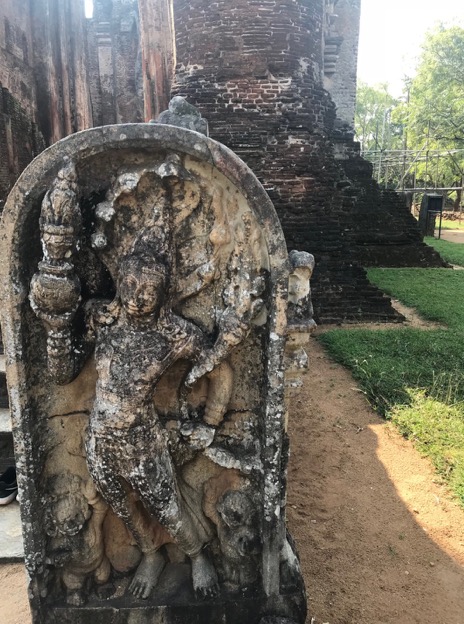
Our first stop was the “Cultural Triangle,” which is how the three ancient capitals of Sri Lanka – Anuradharapura, Polunnaruwa (Fig. 2), and Sigiriya – are known. In northern Sri Lanka, there are old conservation forests of planted mahoghany and eucalytpus, the leaf monkeys have silver rather than black hair, and elephants and water buffalo are often spotted along the roads and bathing in the many lakes of the elephant corridor in Minneriya National Park. In contrast to Pitekele, landholdings are larger and are commonly leased from the government rather than held as freeholds because farmers cultivate rice, grow vegetables or fruits or coconuts for the market. There are fewer tea plantations and more tourists. On the image houses (which house images of Buddha) outside of the 1000-year-old stupas in the ancient cities are figures and engravings which reflect the imagery of Southern India; at the lotus-covered feet of the huge reclining Buddha carved out of stone in the incredible Dambulla cave temple is Lord Vishnu. Many of the stupas reflect not just the architecture of South Indian temples but also the temples of Southeast Asia (Myanmar and Cambodia). Everywhere we go, people are surprised that an Indian speaks some rudimentary Sinhala.
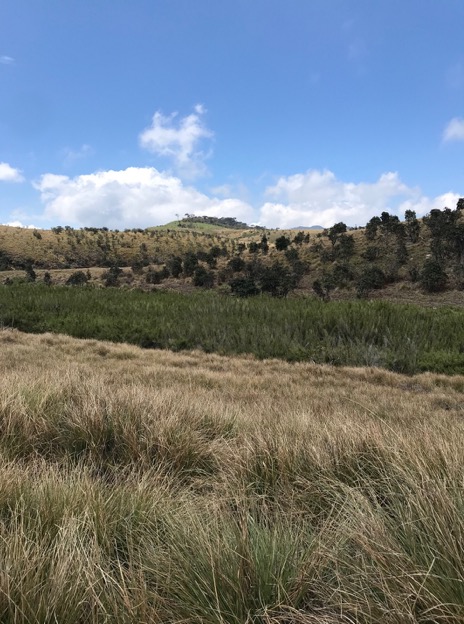
Our next stop was Kandy and Nuwara Eliya, where we skipped the train packed with the tourists who flock to Sri Lanka during Chinese New Year and drove into the highlands past sprawling and picturesque tea estates with names like Shannon and Castlereagh and golf courses named after cities in Scotland. Hindu temples abound and most people in the region seem to speak Tamil, descending from the Tamil workers the British hired to work in tea estates. Nuwara Eliya reminds me of Shimla and Mussouri, Himalayan hill stations in British India; a recreation ground where families would go to get out of the heat and humidity of Colombo. It was strange to feel cold again and to wear a jacket; in the evenings the fog would rise and we could smell wood burning as people began to heat their homes. The highlight of Nuwara Eliya was going to Horton Plains National Park (Fig. 3), where we wandered for three hours through a gorgeous landscape that is the result of 17th-century deforestation by the Dutch for soy plantations and for grazing cattle. Now they really are plains, dotted by rhododendrons and covered in huge gray clouds, looking more like Montana on a rainy day than Sri Lanka – with sambar instead of elk eating out of the hands of the tourists and hikers. We didn’t see a great deal of other wildlife, but these highlands are home to rare bird species and beautiful cloud forest.
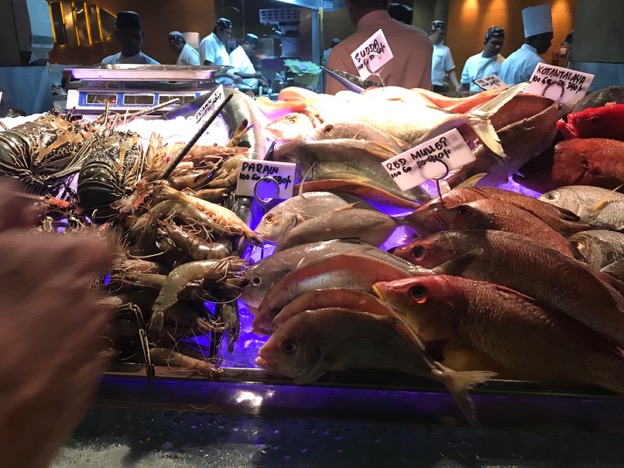
Driving south to Galle, a shipping port and fortified city held first by the Portuguese, then the Dutch, and then the British, we passed big plantations of oil palm – which I hadn’t previously realized is being grown in Sri Lanka. At Hikkuduwa, a beach famous for its coral reef (now dying), my parents took endless photographs of the ‘stick fishermen’ who sit high on sticks in the rocky shore, fishing for mullet, snapper, barracuda. We walked around the old fort admiring the stupa, mosque, and two churches within it – half of the population in the fort is Muslim, many descended from Muslim traders. We looked at the inscriptions on the graves from the 1600s-1800s in the Dutch Reformed Church, its wooden, blue-planked ceiling resembling the hull of a ship; we couldn’t find Professor Ashton’s ancestor, but we tried! Driving east to Mirissa, we saw huge blue whales on a whale watching trip (Fig. 4).
Without these days exploring the rest of this island I wouldn’t have been able to feel so deeply the diversity of this country and why it is considered a biodiversity ‘hotspot.’ So many climates and creatures, landscapes and plantations, architecture and habits and motifs stemming from different parts of South and Southeast Asia and Europe. Nonetheless, I was relieved to return to the serenity of Pitekele, far away from the chaotic roads and tourists, where I introduced my loved ones to the villagers – who had told me they were curious to meet them, and passed thankfully favorable judgment upon my partner! My parents, who have never eaten with their hands and who say that I seem to want to return to the customs of our own ancestral villages by doing so, happily ate the rice and curry my translator’s family served them with their fingers rather than forks. I feel sure that I will return to Pitekele, where people have shown me such hospitality and generosity, and which makes it to me the nicest place to be in Sri Lanka (Fig. 5).
My time here is soon to come to an end, and I am spending the next two weeks finishing data collection for the community study I will write up when I return and saying goodbye to all of the people I have met – people who have climbed coconut trees to refresh me, given me lifts, patiently answered my questions, taught me about their lives and the village. What I’ve learned is perhaps not very surprising: that villagers continue to adjust their livelihoods to conservation rules and to changing economic and environmental conditions, which have made tea the present – but my no means permanent – cultivation system that dominates all others. The forest remains a resource to be used at particular moments for particular needs, which right now are few, and non-timber forest products play a marginal role in peoples’ lives based on the conversations I have had. As for home gardens, as one person said to me when I asked them about whether they would call their gardens ‘traditional,’ they remain “something we don’t even think about, something we do because we want something – fruit, vegetables, timber, medicine – and we grow it so that we don’t have to buy it.” In addition to their practicality in daily life, these gardens play an increasingly important role in contributing to forest cover and diversity as more land in the buffer zone of Sinharaja is converted to tea. I look forward to seeing the results of future encounters as other fellows continue to shape the home garden at the field station, carry out research projects here, and find ways to translate their learnings into day to day conservation practice.
 slpfc.org