
by Asha Bertsch
Having arrived in Sri Lanka at the tail end of the rainy season, this is the first Sinhala word I learned. It’s a delight to say, and brings the best news!
Jo and I arrived two weeks ago and we’ve been busy getting acquainted (or in Jo’s case reacquainted) with the plants, the people, the land, language, and of course the food. It’s been nearly two years since the first SLPFC fellows planted our demonstration site here in Pitakele, and it’s impressive to see the homegarden they cultivated during their time here. Although, equally impressive is the work the forest has done to reclaim it!
Keeping the forest out of the forest garden is a perpetual task, especially in these early years of establishment. Young fruit trees are quickly overtaken by ferns, grasses and fast growing shrubs–the exact scenario we’ve walked into. Needless to say, our first week was a labor intensive one. Wading through kekila fern and other weeds, Jo and I spent the days hacking back the brush and fighting off the kudellas (leaches!), embracing our own tortuous scavenger hunt for all the different fruit trees rumored to have been planted around the property. Even the wild orchids here are so prolific they outcompete many of our young saplings (see Fig. 1). I can hardly believe nor justify my actions, but here I am, pulling up incredibly lovely pink orchids and calling them weeds?!? It’s all relative I guess?
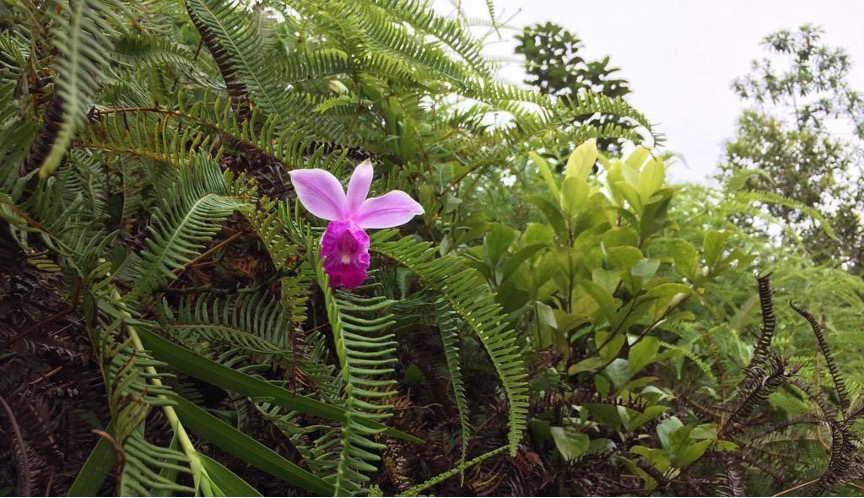
After a week of weeding and reconnaissance, we managed to find many of the original plantings in healthy conditions! Although we mourned the loss of a few good durian and many kesel (bananas).
Week 2, Jo and I are now clambering up and down the hillside taking inventory measurements in between Sinhala lessons and hauling large sacks of compost across the one-log bridge leading to the field station.
But it’s not all backbreaking.
Today is the full moon and that means no school and no work! This day, each month, everyone heads to the temple in the neighboring town of Wedegella for a full morning of flower arrangement, incense lighting, bell ringing, prayer, and a feast of unimaginably large plates of rice and the most delicious coconut curries.
Numerous ceremonial activities happen during this event, but the flower arrangements are my favorite. Early in the morning, villagers collect flowers from around their homes for the occasion. Once at the temple, the flowers are communally arranged into colorful bouquets–small baskets are placed all round inside the temple, where people approach and carefully place their own flowers. The room is full of people and the overwhelming scents of different jasmines, frangipani and roses –once the baskets are overflowing, they are carried throughout the temple compound in a musical procession for everyone to admire and give their prayers to, after which the bouquets are finally placed into the shrine before a large statue of the Buddha (today also happens to be thanksgiving, and I can’t think of a better way to have spent it).
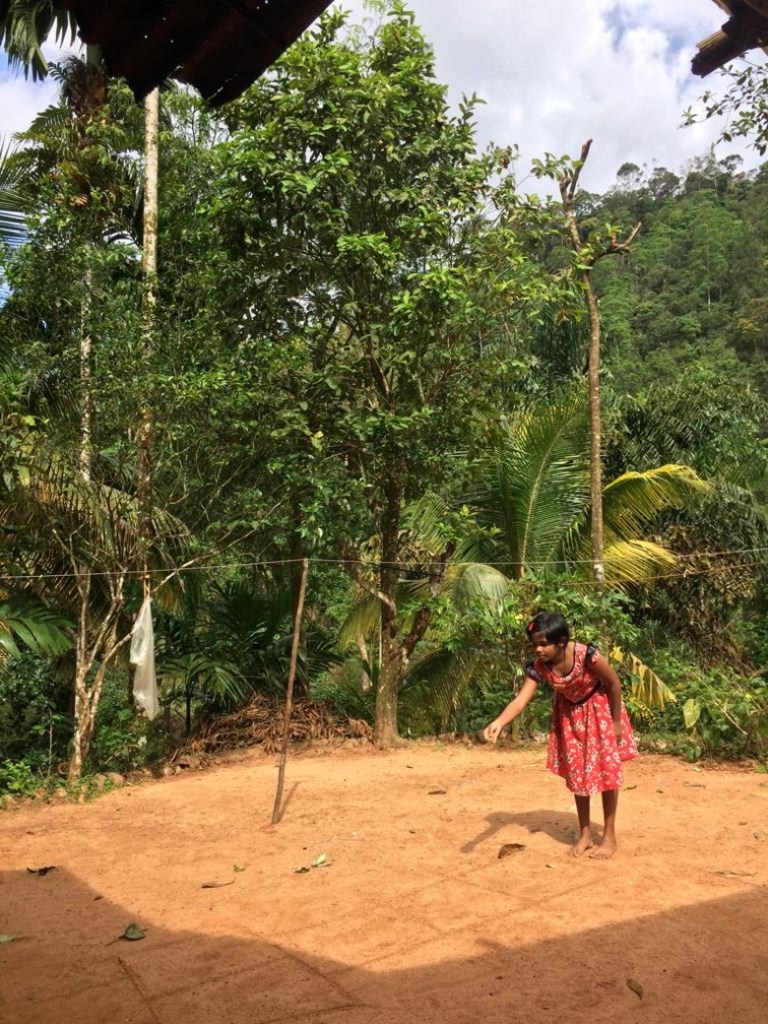
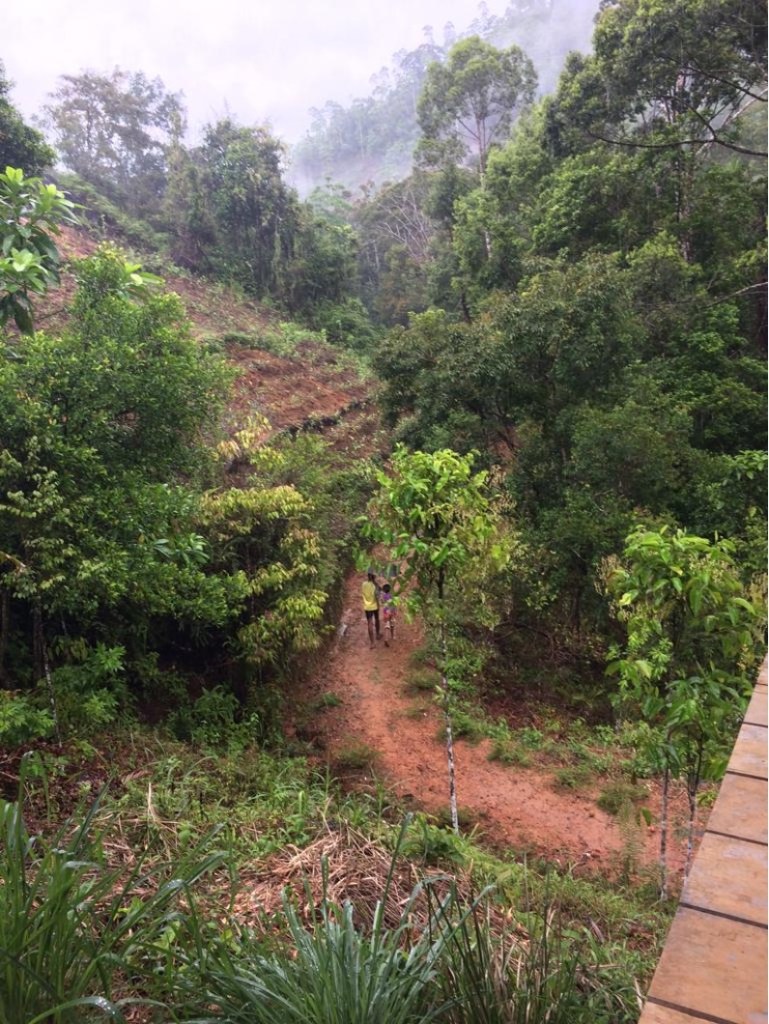
Although this is a “day off”, the work of documenting a home garden never ceases! Many of the ornamental species grown in the home garden facilitate this monthly ritual, and we recognize their flowers both in front of the shrine and in our neighbor’s gardens. On a separate occasion, a lunch invitation means an opportunity to observe which species are planted near the home of our host and ask questions about their cultivation and use…and maybe quick game of hopscotch (Fig. 2).
All in a days work.
 slpfc.org