
By Asha Bertsch
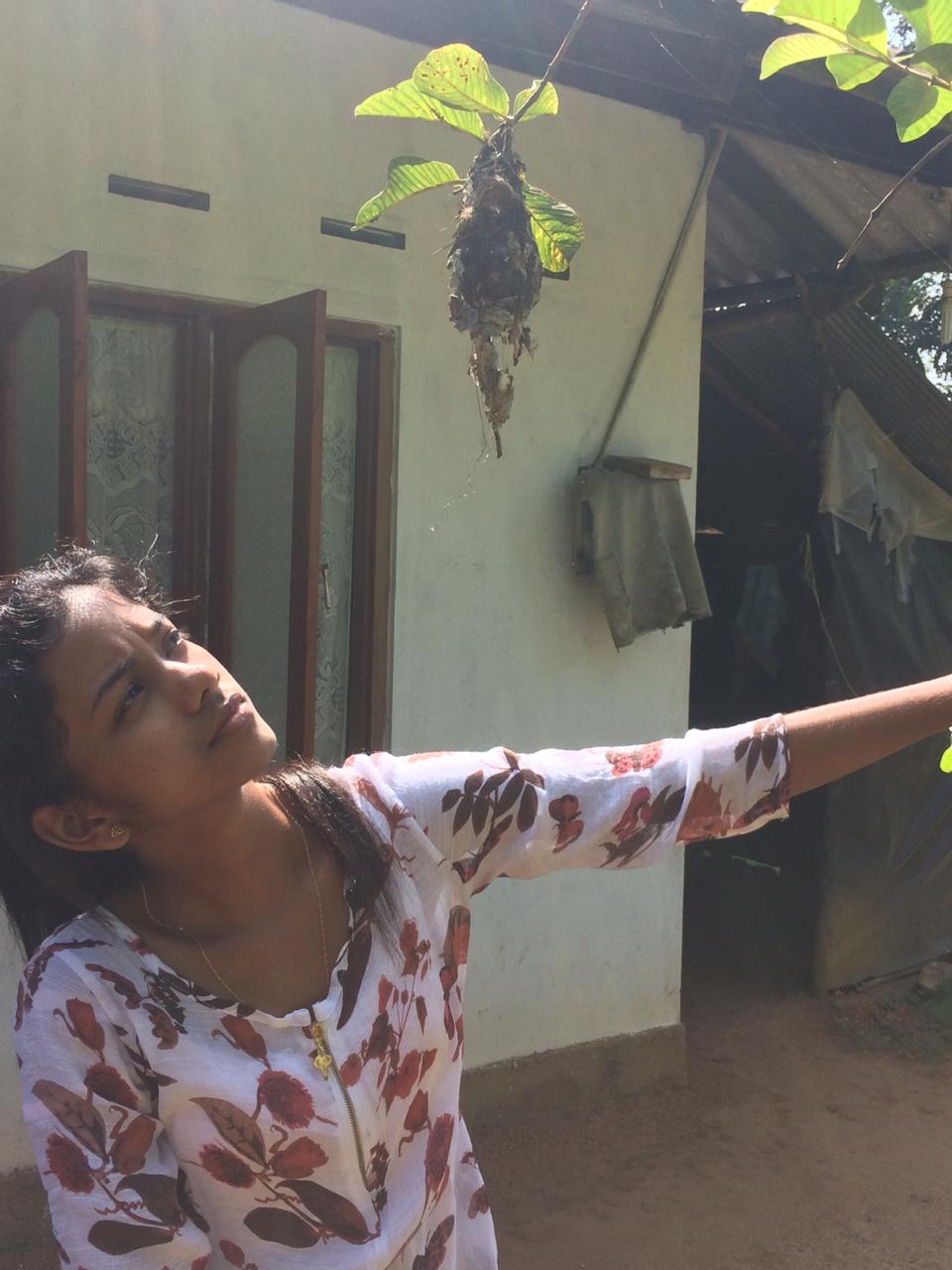
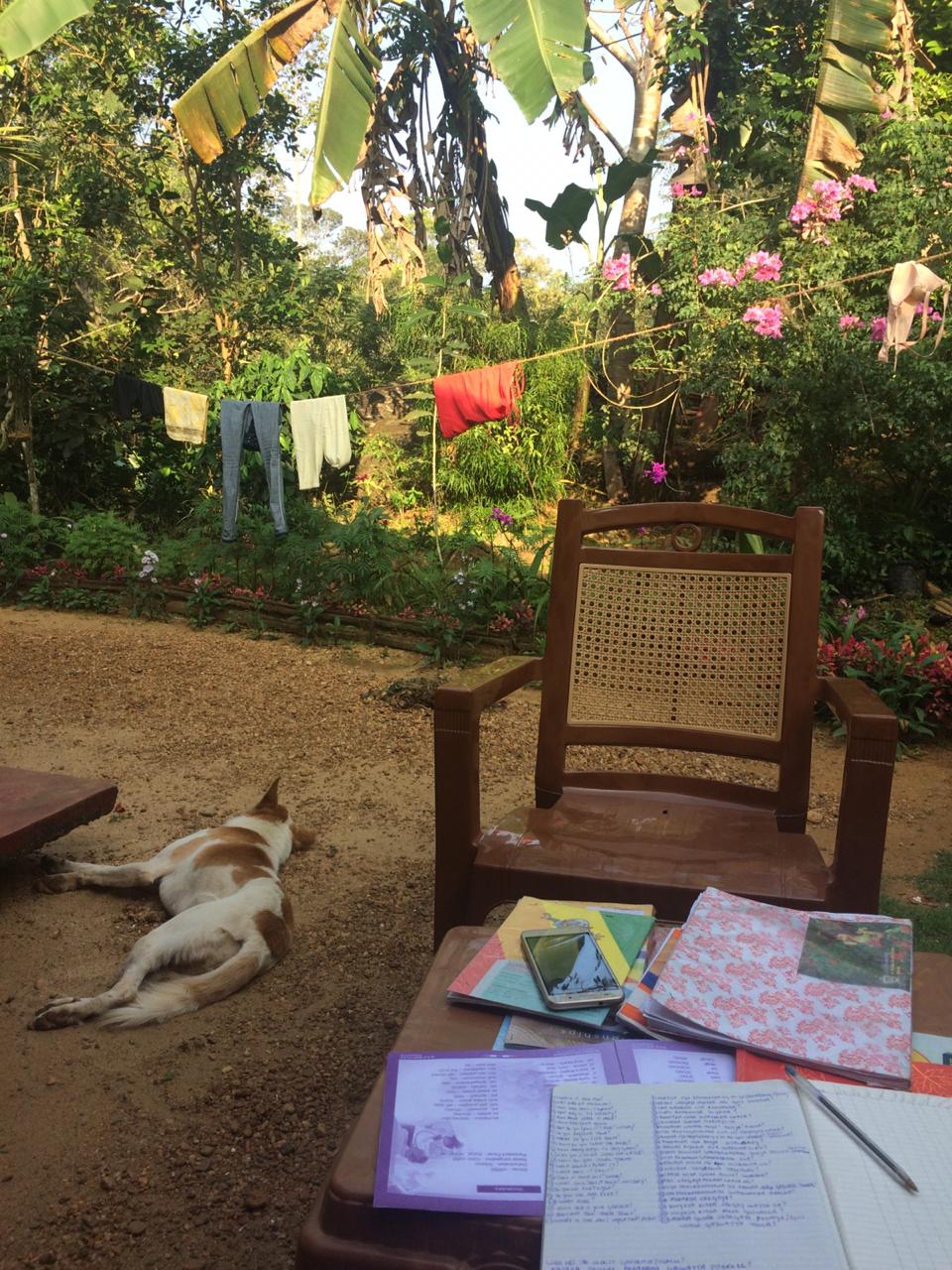
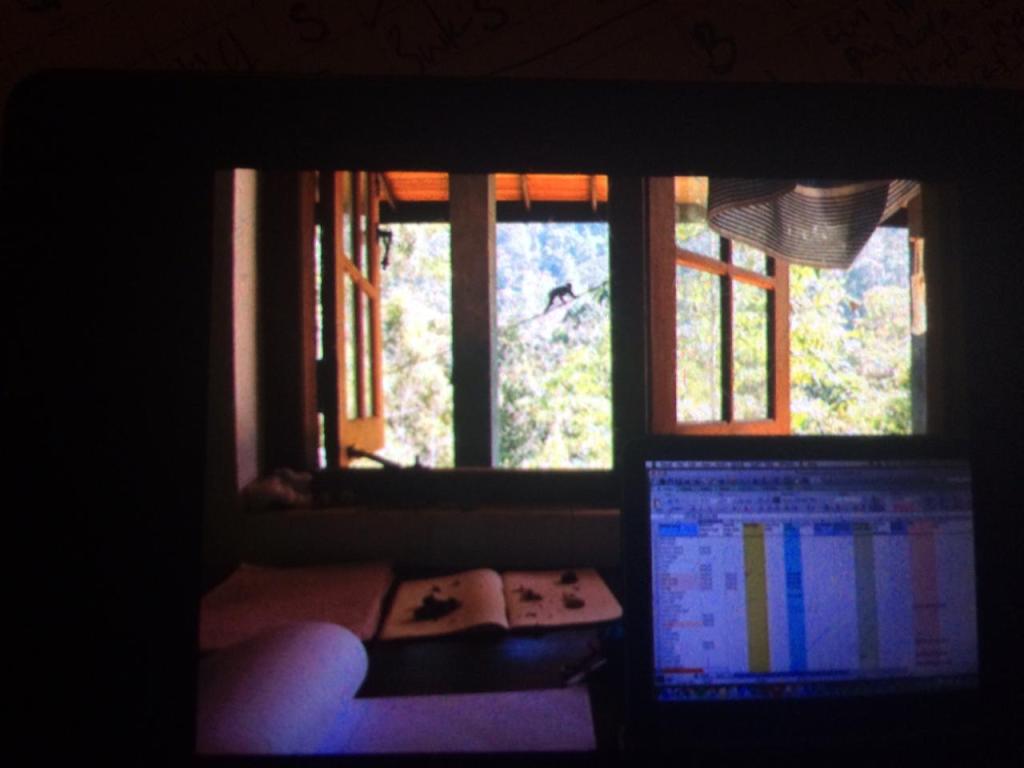
I’ve officially begun taking Sinhala lessons with Niluka, a young woman I know in the village who is preparing to head to university in a couple months (Fig. 1a). Prior to this, my conversations consisted of a lot of pointing and an elaborate and foolish display of me acting out different roles in order to learn new words and communicate. Getting to learn a bit of grammar and some more abstract vocabulary is a really welcome opportunity for me, and also a chance for Niluka to get to practice her English before she heads off to start her degree program. Sinhala is a beautifully sing-songy language of incredibly long and tongue twisting words. For example, the word for “use” is pavichchikarenua, and the word for “buy” is milletegannawa. Badaginni is a great word, meaning “hungry”, with the literal translation “belly fire”! It’s definitely not the easiest language to learn, but with these twists and turns in word meaning it’s a fun language to get to know (Fig. 1b).
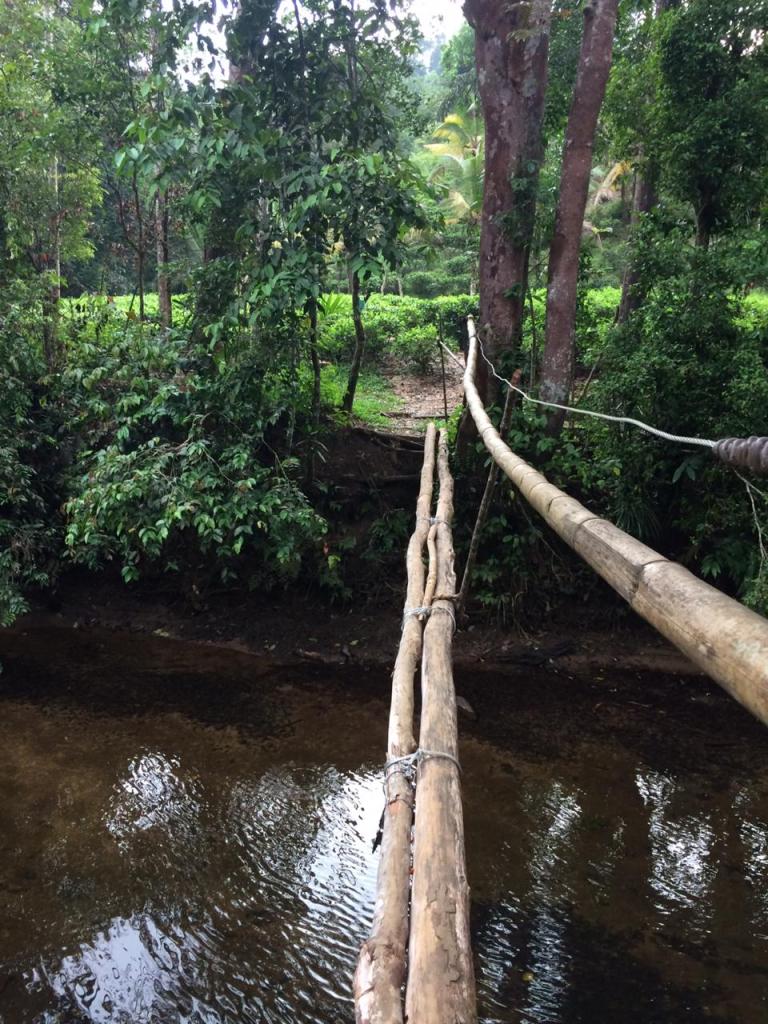
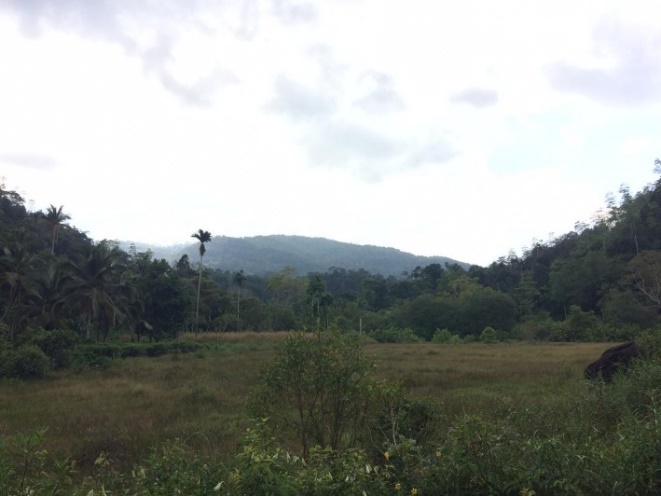
Niluka is also working as a translator for me while I conduct interviews with residents about their home-garden cultivation, and her help in this process has been invaluable. A typical day here begins with a morning of weeding, watering, and checking up on my plants in the nursery. Afterward, I cross the “two-log” bamboo bridge and make my way through the village, stopping in with Pitakele residents to interview them about their gardens (Fig. 2).
When I began this process, I imagined being able to knock out at least three to five interviews a day. I was wrong. Speaking with folks about their gardens takes much longer than I expected for a few different reasons. For one, timing can be tricky. Most folks work picking tea until about 3 or 4 pm, and with daylight fading around 6 pm, I sometimes have only enough time to visit one property. I make the morning rounds anyway, hoping to find someone who is taking the day off or doing work around the house. Often I’m lucky to find someone who is toiling in the garden or repairing a broken radio. If someone is home early in the day, we’re often asked to stay for tea, and sometimes lunch, and the day seems to slip by.
Then there’s the matter of formality. Asking questions and ticking off boxes feels all too formal in a setting as intimate as Pitakele village, so I try not to sound like a census surveyor. This means taking things slowly in a less-structured-more-meandering type of conversation, which I like. Finally, there’s the language barrier. My current level of Sinhala is ok…well, I’ve got a broad vocabulary, but I suspect I speak with the grammar of a six-year old. This is okay for a lot of forms of communication as long as there’s a hefty amount of context backing me up. But even with Niluka’s help, the nature of my questions doesn’t always translate according to plan. If I ask which month of the year a specific tree has fruit, it usually prompts my host to begin searching for fruit for me to eat, either from the species in question, or if unavailable, from whichever nearby tree does have fruit. The conversation usually goes something like this:
” So what time of year are rambutan ripe anyway?”
“Ooh, not now. Sorry. But here, I think we have some oranges. Hey! Go pick some oranges for this foreigner! He’s getting them.”
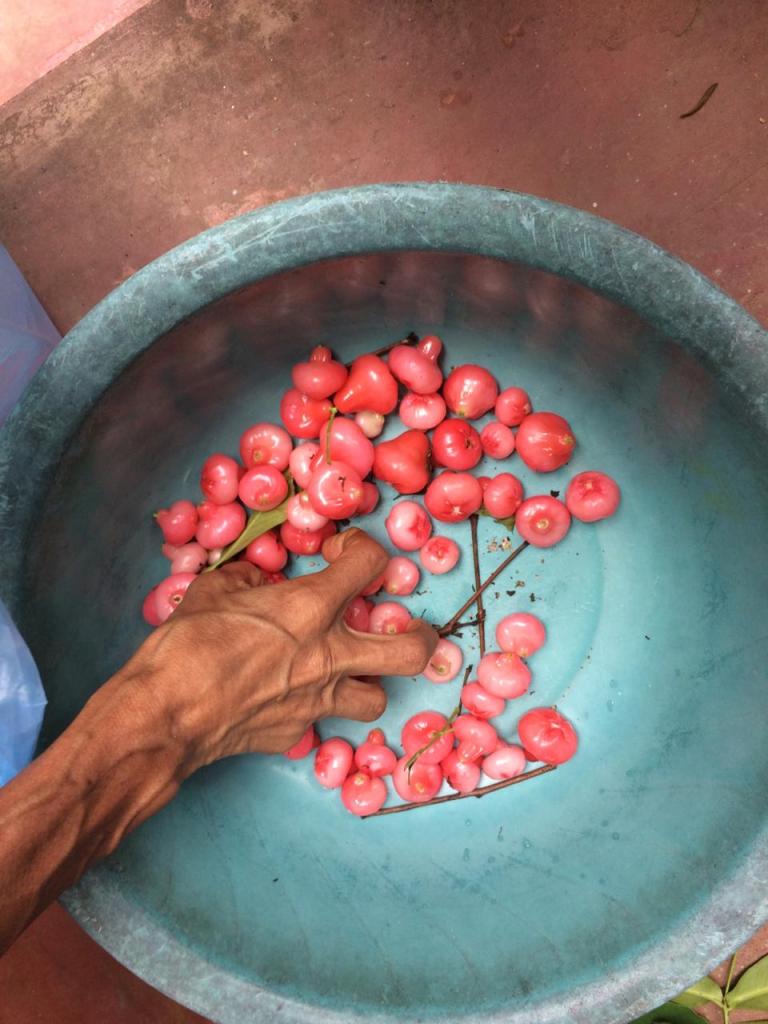
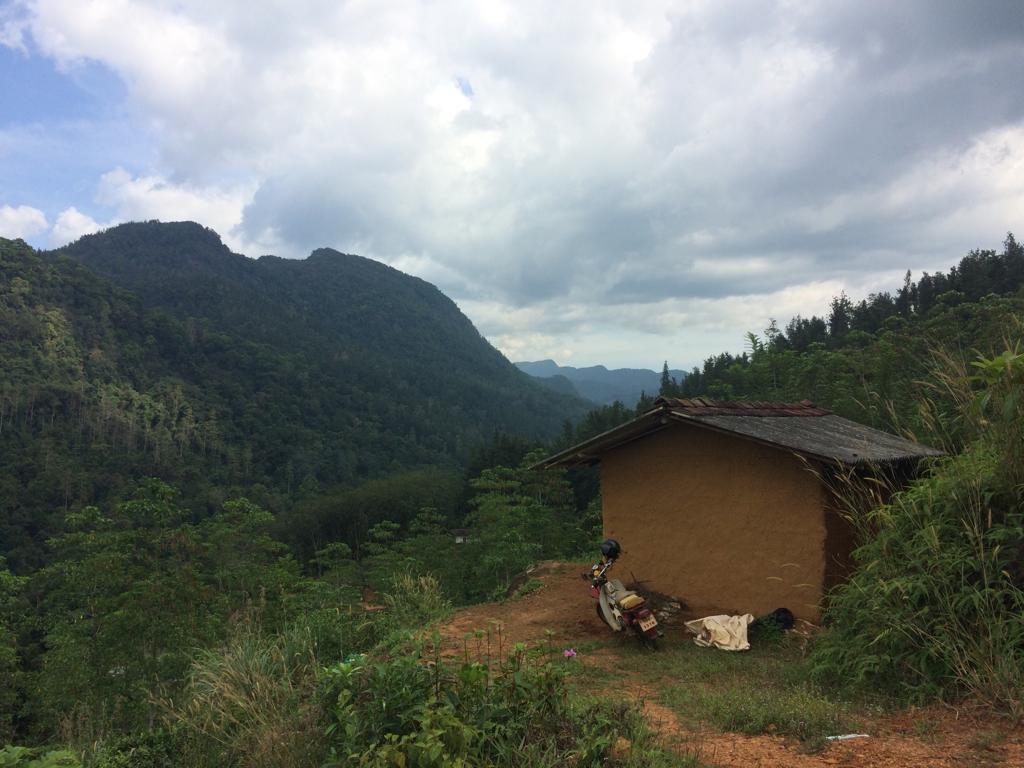
By the time I’ve stumbled over all the Sinhala words I know to try and explain there’s no need for anyone to go out of their way, someone has climbed the tree picked and peeled the oranges, and is happily handing them to me. The original subject of the conversation has now been confounded and changed (Fig. 3). I tend to just go with the flow until I sense the next opportunity to glean a bit more botanical info. So, now you might imagine why I more likely manage to get through only one or two interviews per day. This may seem tedious, but the stumbling process is one I enjoy. There’s typically a lot of self-deprecating laughter, and I usually end up learning the answers to questions I didn’t realize I’d wanted to ask. Oh, and tons of fruit.
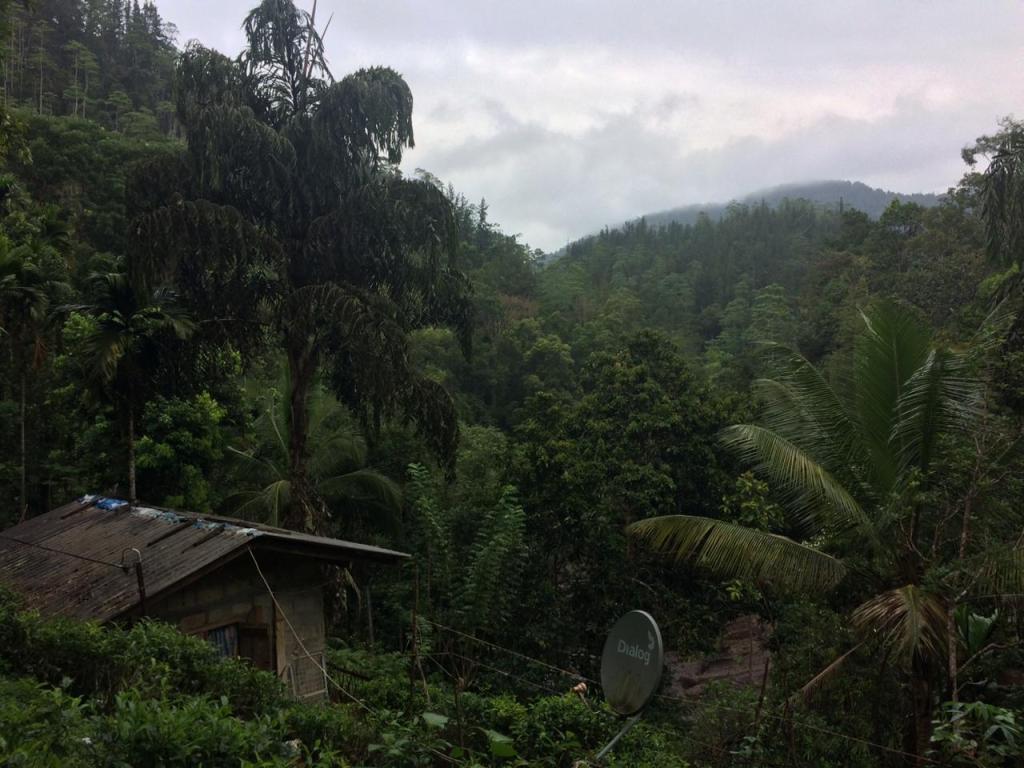
Working in Pitakele lends itself to some pretty picturesque views and I still can’t get over how fortunate I am to be here. The homes I visit and the trails to get to them are often in stunningly beautiful locations (Figs. 4, 5). With my desk window overlooking a west-facing slope of the Sinharaja forest, even data entry is a dream!
 slpfc.org