
By Asha Bertsch
People in the village often find it odd that I’m alone out here. They say “paluyi pao.” Effectively translating to “you poor lonely thing”, hahaha. To this I always emphatically respond, “paluyi ney!” or “not lonely”. Although I am working here alone, I’m always pleasantly surprised by the number of group-work activities I end up involved in. Folks are always generous to jump in and lend a hand with whatever I’m doing, and I too am usually pretty eager to help out and learn something new from neighbors in the village. Whether it’s helping to haul sand from the river or to prepare a meal, I always learn a great deal about the rhythm of life here, and sometimes some great cooking recipes.
Back in December I was invited to help excavate sand from the riverbank. This was to be transported to a construction site and made into concrete where it would lay the foundation of a new community hall being built. Wading in the river were about fifteen men and boys, and me, shoveling sand, filling sacks, and hauling them up to the footpath. At one point in the day someone taught me the word “sramadana” to explain what we all were doing. It’s when a group of people get together and work, without monetary compensation, to accomplish a task which serves the greater community. It’s the kind of work that can be pretty challenging and unpleasant when done alone or with few hands. With the help of a crowd it’s an afternoon of joking, playful competition, tasty snacks and festive beverages, and overall revelry (Fig. 1).

I recently had the chance to help some friends prepare jackfruit (Artocarpus heterophyllus), for dinner; a laborious process that included lots of laughs, a sticky mess and a tasty end product (Fig. 2). Jackfruit is a tree in the fig family, native to South India and now planted widely across the world. The tree has many, very tiny flowers borne together and pollinated by midges, that then develop into one large multiple-seeded fruit that was originally dispersed by a variety of mammals (rodents, giant squirrels, monkeys, wild boar and elephants). The big fruits are borne on the trunk and, when ripe, just fall to the ground. In Sri Lanka, every home garden has a jack tree to provide a continuous source of food from the fruit and as an important timber tree for house construction. It has been cultivated in Sri Lankan home gardens for thousands of years. People here LOVE jackfruit, or “Kos”, in Sinhala. The fruit is actually eaten at three different stages of maturity, each of which is pretty tasty. “Waraka” refers to the fully ripened fruit, which is eaten raw and is incredibly sweet (in a juicy fruit gum kind of way). “Polos” or “baby jak” as it’s affectionately called, refers to the young and unripe, but more tender fruit, which is often chopped into segments and cooked into a richly spiced curry. Super good. The very large, but still unripe fruit is called kos, and is often boiled along with the seeds and turned into a sort of starchy mash mixed with “gam miris” (black pepper), “miris” (fresh chills), and “sudu lunu” (white onion). This is a very common dish that I’ve come to love but had no idea how much work it was to prepare until now!
The whole preparation takes about two hours, and it helps to have several pairs of hands on-board. Fortunately, several kids from the houses next door came to help, just for the fun of it. First, we cut the green armory skin away from the fruit; a process that results in the release of an incredibly sticky white latex, which is removed with the aid of a coconut husk. Then, the fruit is cut in half and the dissection process begins, which in this case means about six people digging into the fruit and tiny shreds of kos flying in all directions. A large part of the jackfruit consists of rubbery stringy tendrils which surround the fleshy arils which enclose the seeds. We all stood around the pile of fruit and helped separate the arils from the rest of the fruit matter. This stringy part is discarded, although everyone seems to enjoy snacking on a bit of it during the process. Before beginning the next part of the process, everyone needs to wash their hands with coconut oil to remove the sap. If you don’t, your fingers just stick to one another and you can’t do much with your hands. With only the solid segments remaining now, each segment is cut open to remove the seed inside. The seeds are set into one pile and the fleshy segments in another. A very thin, hard shell encases each seed and must now be removed. The seeds are sliced in half so that we can easily peel the shell away. The shells are discarded, leaving now only the two piles of shelled seeds and the white fleshy arils that formerly surrounded them. Only after all this could we finely chop the remaining fruit into small pieces and cook them up for dinner. But hey, as one of the biggest fruits in the world, I suppose it deserves a bit of extra attention.
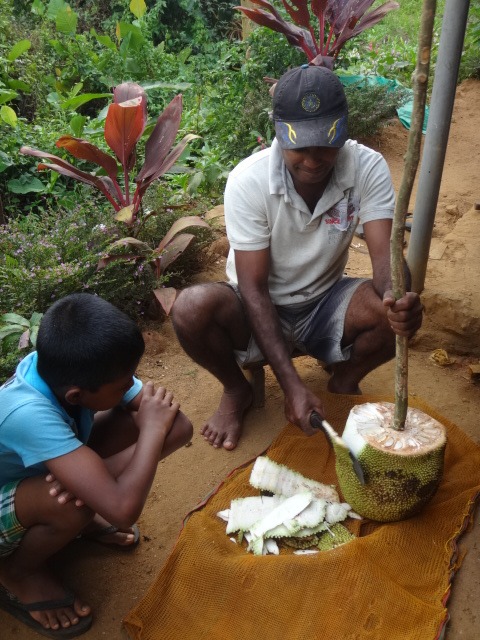
Figure 2 a, b – Preparing Jackfruit for cooking. First cut the green armory skin away. 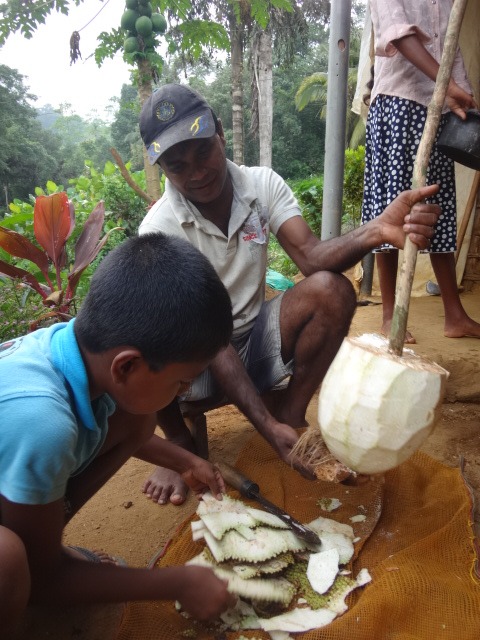
Figure 2 a, b – Preparing Jackfruit for cooking. First cut the green armory skin away. 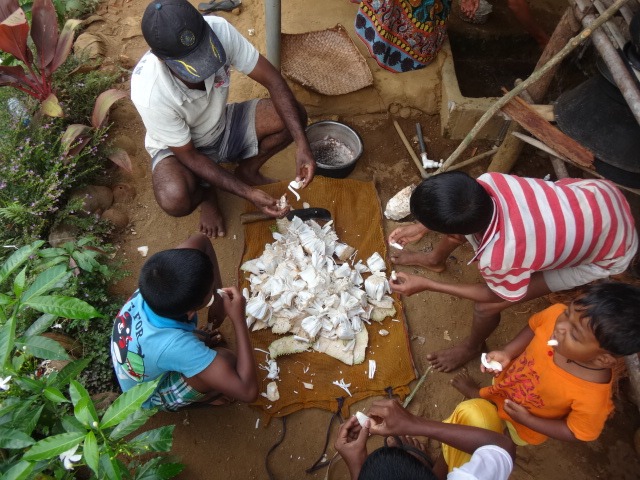
Figure 2. c. The stringy part is first discarded although it is good snack food 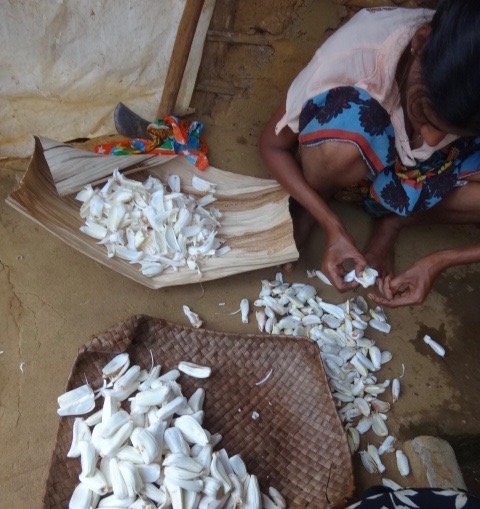
d. The segments are cut open to reveal the seeds; 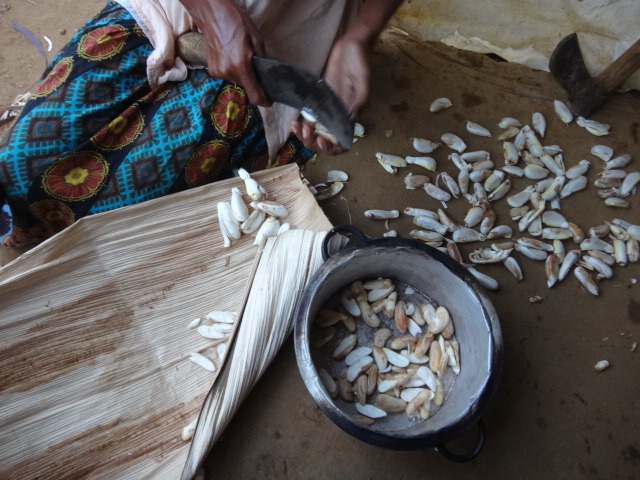
e. The seeds are then cut in half and the shell peeled off. 
Figure 2 f. The finished product – shelled seeds along with their shells, the arils and a happy, sleeping cat
Meanwhile back at the field station, we just completed our fence! Several of the banana trees have begun to re-sprout since the ura’s (wild boar) last massacre. In order to prevent these young banana sprouts from meeting the same fate as their predecessors, we’ve fenced off the area on the north, south and west sides of the house (much of zone 1 and 2 – See prior 2016-17 Blog 8 for the home garden design). I’d seen a number of fence variations in the village, though most were used to keep the wai mia (the oh-so-cute mouse deer, who looks exactly as the name implies) out of the garden. These fences are quite attractive and made from local materials like live-stalks of larapa (Gliricidia sepium) and intricately woven pitcher plant vines (Nepenthes spp.) (Fig. 3). I thought I might try to replicate something like this, but after asking for recommendations around the village, it seemed that shiny, shiny sheet metal might be the best medium for keeping the wild boar out. Solid, durable, but so very difficult to look at in the noonday sun. Nonetheless, I decided to go for function over aesthetics in this case.

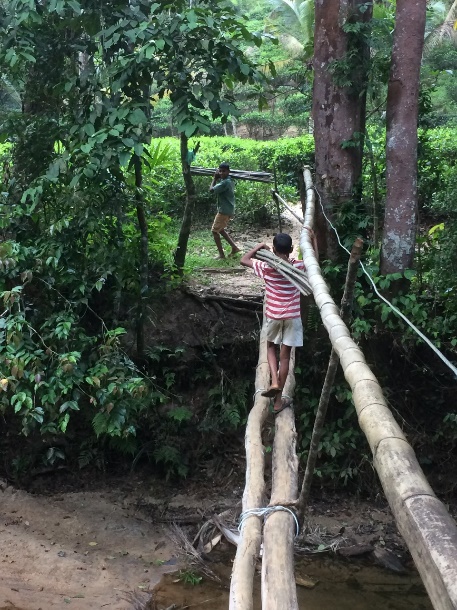
It was a few full days of hard work, clearing the new space of weeds, carrying large rolls of sheet metal across the one-log bridge, cutting trees for fence posts, and digging post holes. Luckily, I think Somerathna, my caretaker and friend, took pity on me, because he brought his whole family over to help out (Fig. 4). His son Amal and I dug post holes and nailed sheet metal, while Somerathna cut down a small “keppetia” tree (Croton lacciferus – a small tree of medicinal value whose leaves are believed to be useful as natural soil fertilizer) to use fence posts. His daughter, Netmini, playfully helped with a bit of weeding, while helping her mom Piasili harvest fern fiddleheads which we had for lunch. At the end, we all jumped in the river and called it a day. It was a real family affair, and another example of how rewarding hard work can be done with pals.
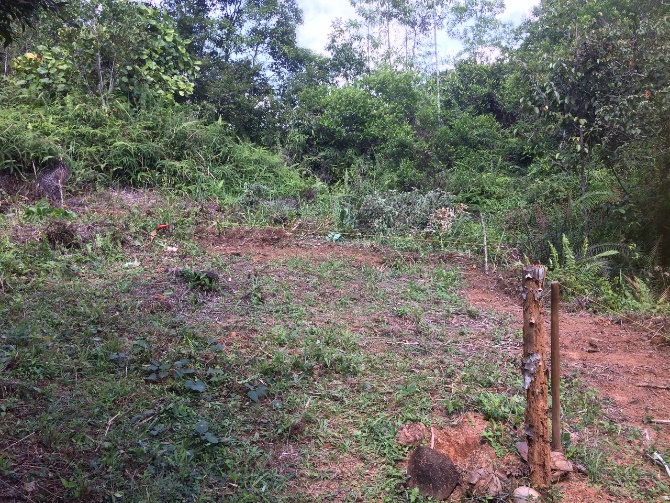
Figure 4 a-b) laying the ground work for fence installation; 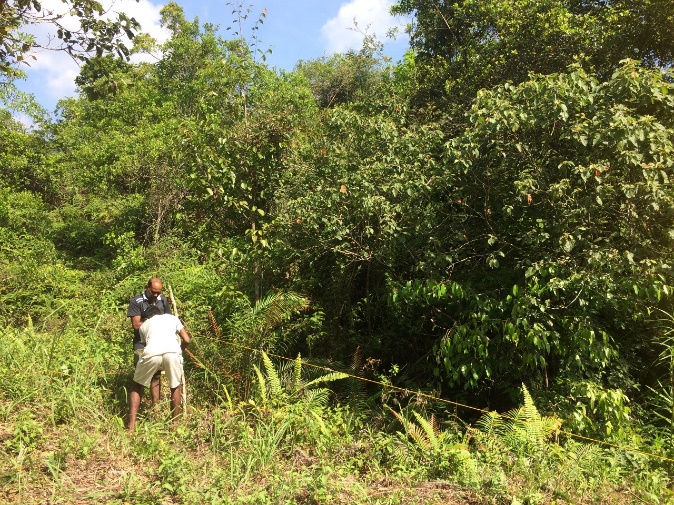
Figure 4 a-b) laying the ground work for fence installation; 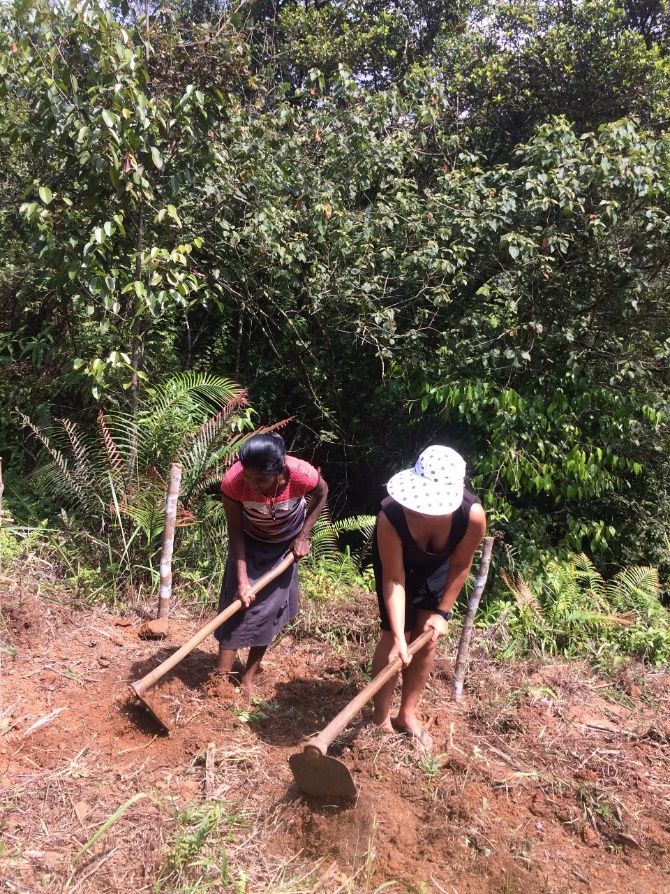
c) Piyasili and me digging post holes; 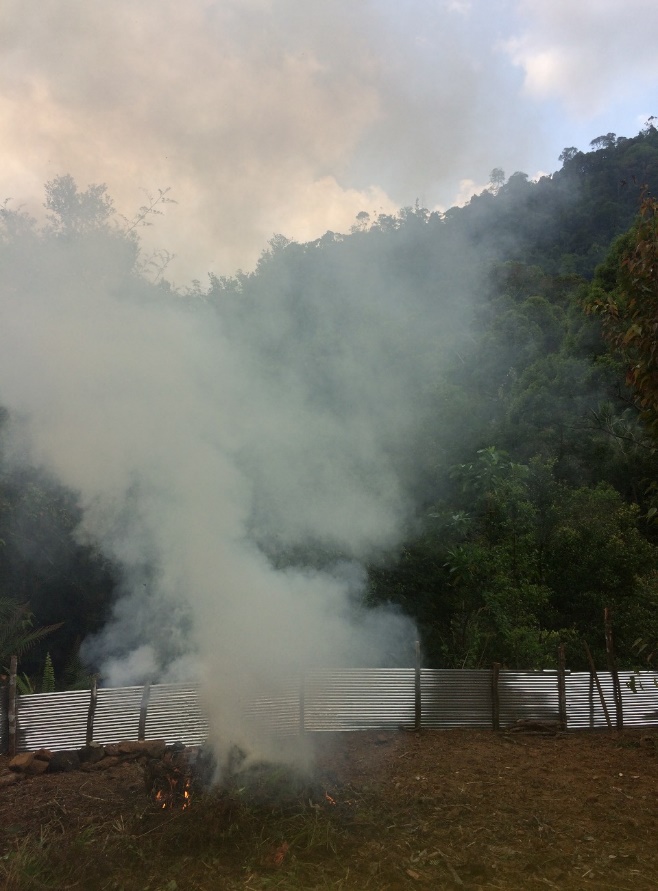
d) Burning the weeds; 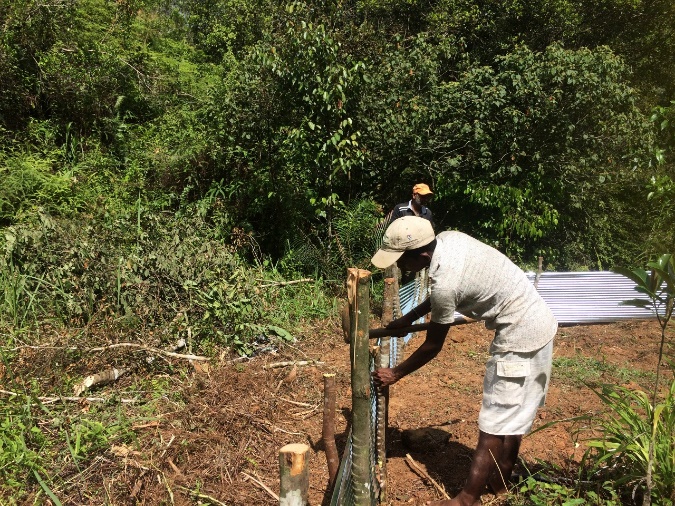
e). Amal nailing sheet metal into the fence posts; 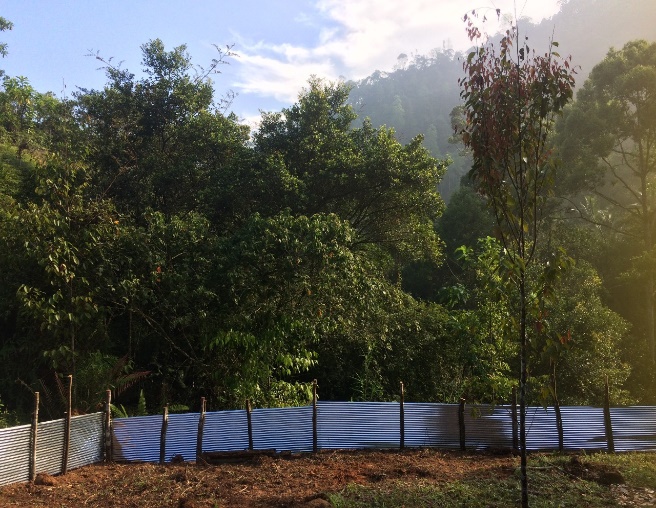
f) The finished product! 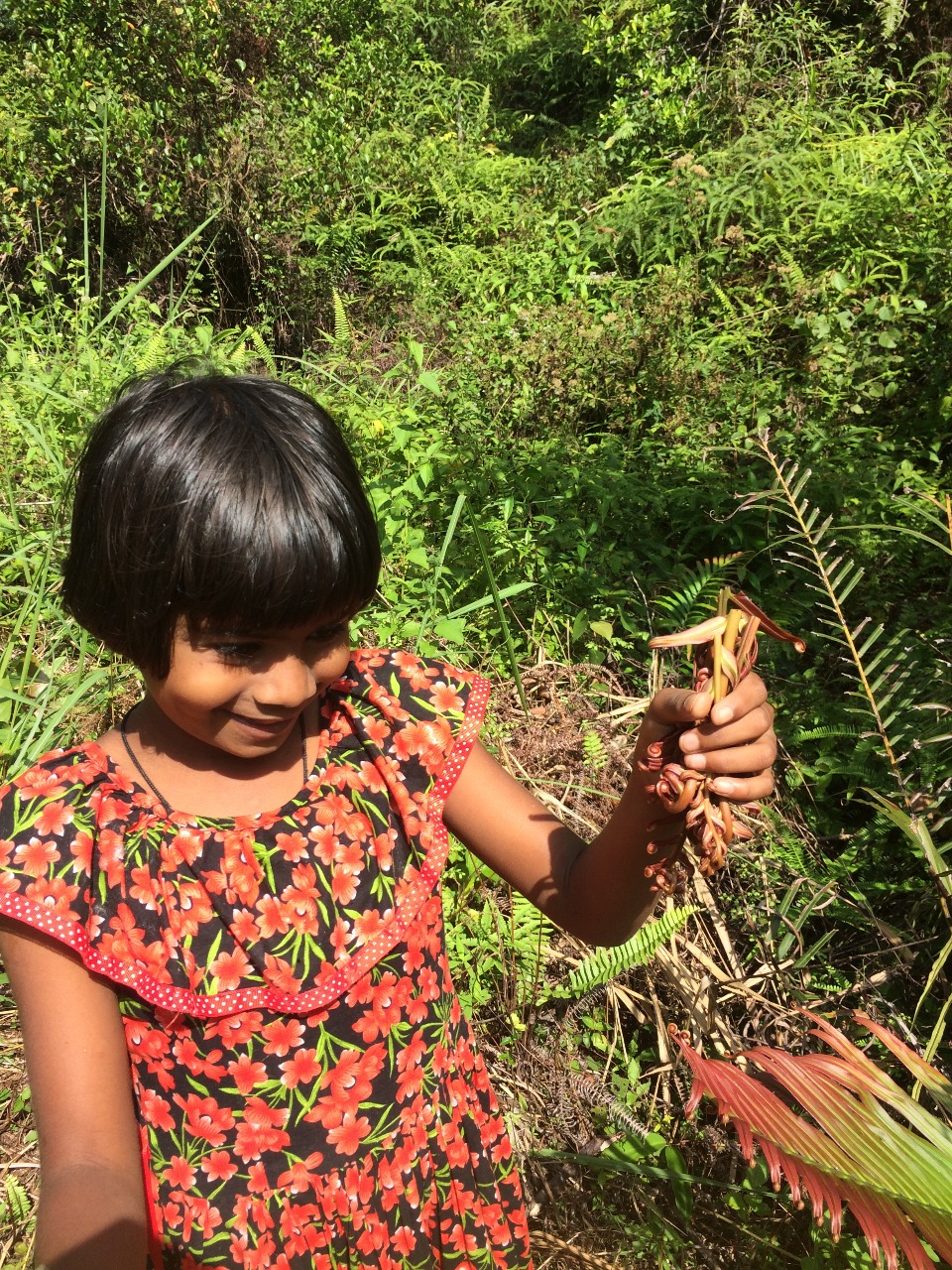
Figure 4 g. Netmini collecting fiddlehead ferns
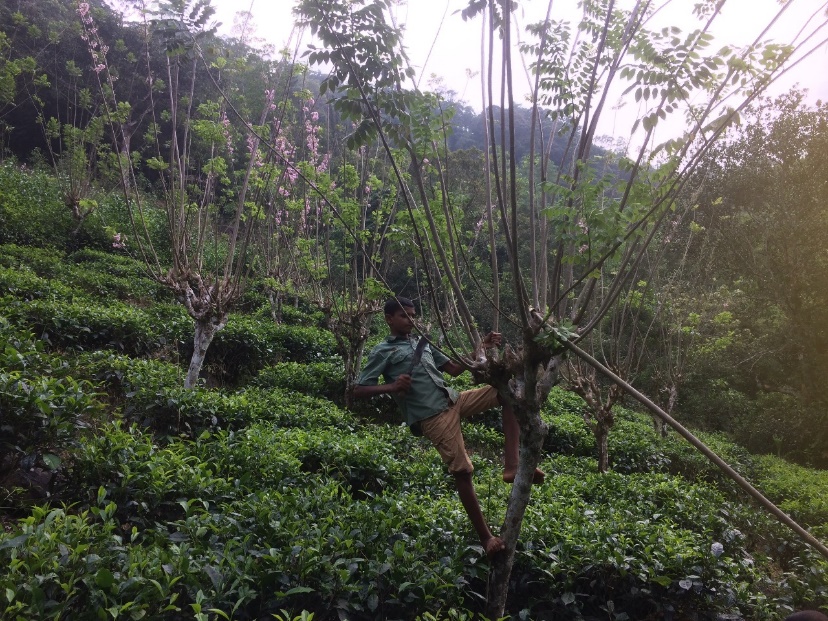
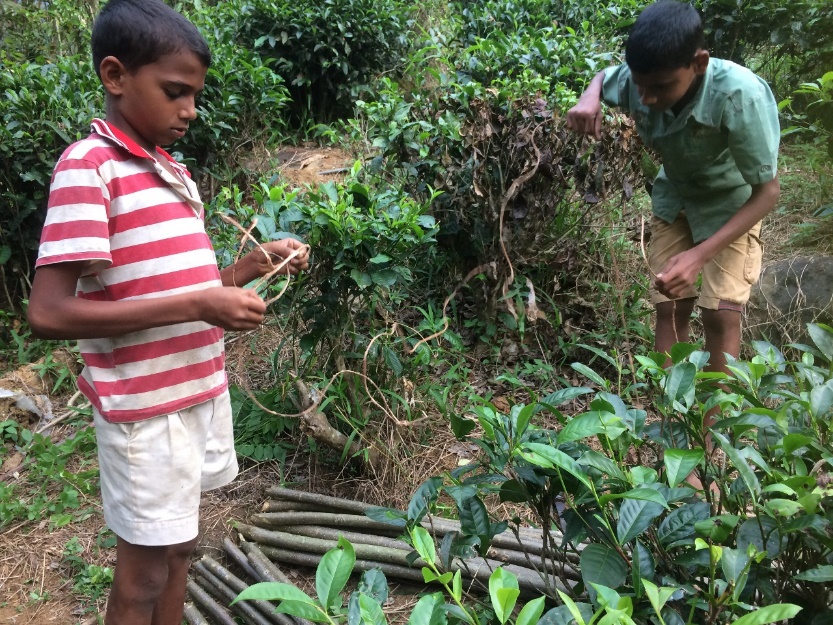
The new addition of bright metal gave the garden a bit of a stark appearance, so the next day I decided to add a bit of local flare and set out to see if I could find someone with a surplus of larapa trees (Gliricidia sepium). This is easily done since many folks plant these nitrogen-fixing trees throughout their tea plantations as a natural fertilizer. The trees are pollarded, leaving about a five-foot trunk topped by ten or so leafy branches which are periodically lopped off and left in the field to add nitrogen to the soil. Conveniently, these branches are often perfectly sized for live-stakes. After a morning of asking around, I managed to find someone nearby who had plenty to spare and was happy enough to let me harvest a few branches. Again, after seeing what I was up to, a couple neighbors jumped in to help me out. In this case, brothers Kavindu and Tharindu were enthusiastic to show me how it’s done, climbing into the tree and cutting down the branches with small machetes and lashing the pile together with bandura (pitcher plant vine) (Fig. 5). Now planted along the new fence, they’ll hopefully add a bit of organic color to the tin fortress I’ve put up. The fence still looks a little bare-bones now, but once the larapa leaves start to come in and we get a few vines growing along it, it should shape up nicely to resemble something a bit more typical to the area, and hopefully with the added benefit of being ura proof! Fingers crosses!
I’m really not sure how long all this would have taken me on my own, so I just want to acknowledge my absolute appreciation for Somerathna, Piasili, Amal, Netmini, Rohini, Pemasiri, Tharindu, Kavindu, Vinod, and the amazing tea lorry drivers!!
 slpfc.org