
By Asha Bertsch
May is mushroom hunting season. Every day now, I run into folks wearing mischievous smirks stretched across their faces, some carrying sacks as big as themselves filled with the foraged goods. “Hatu pola! Hatu pola!” they ecstatically shout (literally translating to “mushroom market”), when I ask where and what they’ve been up to. It’s a well-loved time of the year for Pitakele folks, venturing into the forest, excited at the prospect of finding mushrooms, stumbling onto new secret spots. Everyone has their own secret “markets” and everyone loves to boast about and compare how productive their own sites are (without of course revealing the locations). My curiosity finally peaked after crossing paths with a couple of men in their mid-sixties hauling four massive sacks filled to the brim with gorgeous little brown capped mushrooms, and giggling like school girls (Fig. 1a). I begged them to take me on their next trip. They declined but directed me to Udeyashoka, who was going the following morning (Fig. 1b).

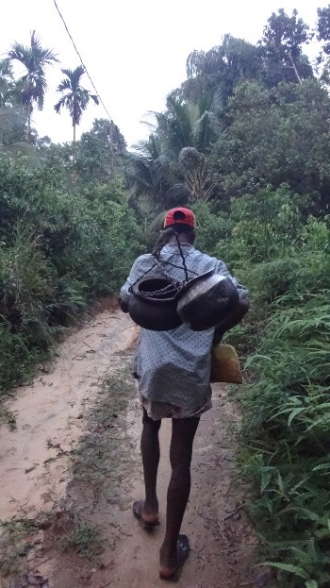
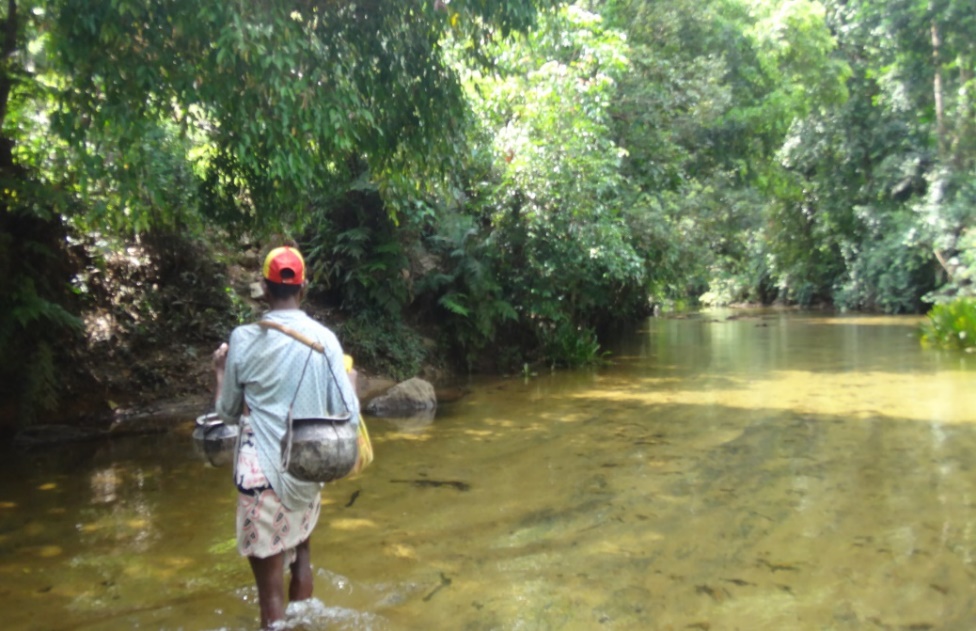
The next morning, we head out at 5:30. Getting to the “mushroom market” takes about an hour, and my partner in forage has a couple other errands to run along the way, collecting sap from his two kithul trees (Caryota urens), so we need to get an early start. We wade through a wide but shallow stretch of the river, cross into a neighboring tea plantation and duck into the dense forest. It’s rained a lot this month, which is great for mushrooms, but also great for leeches. Udeyashoka walks through this forest several times a day to tap his trees. He knows the forest well and he walks fast (at times I actually have to run to keep up with him) so there’s no time to pick the leeches off. Oh well.
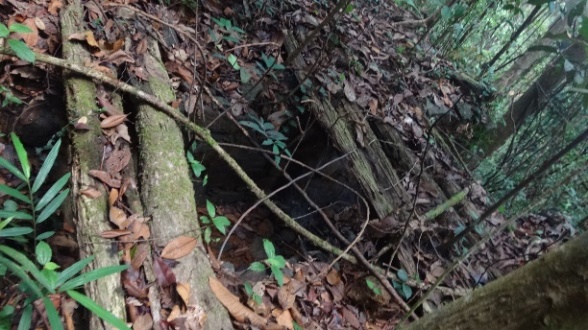
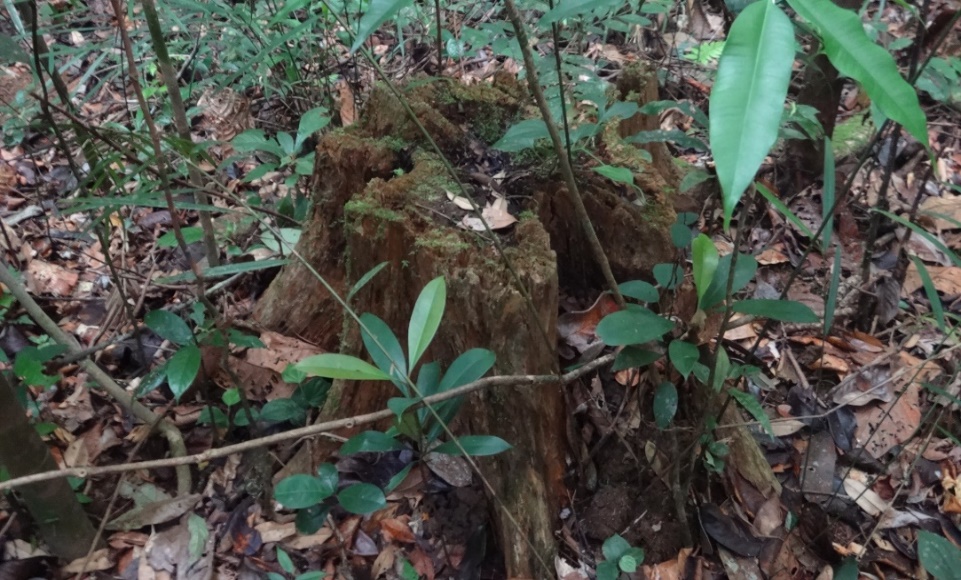
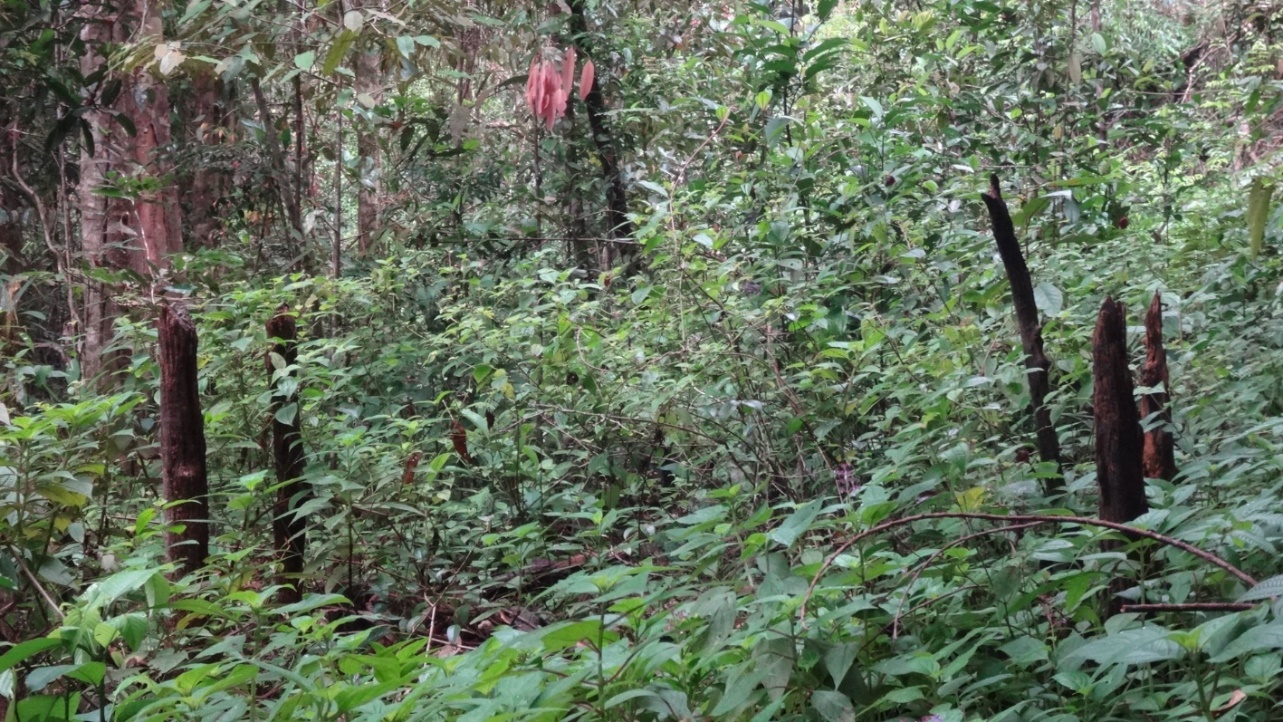
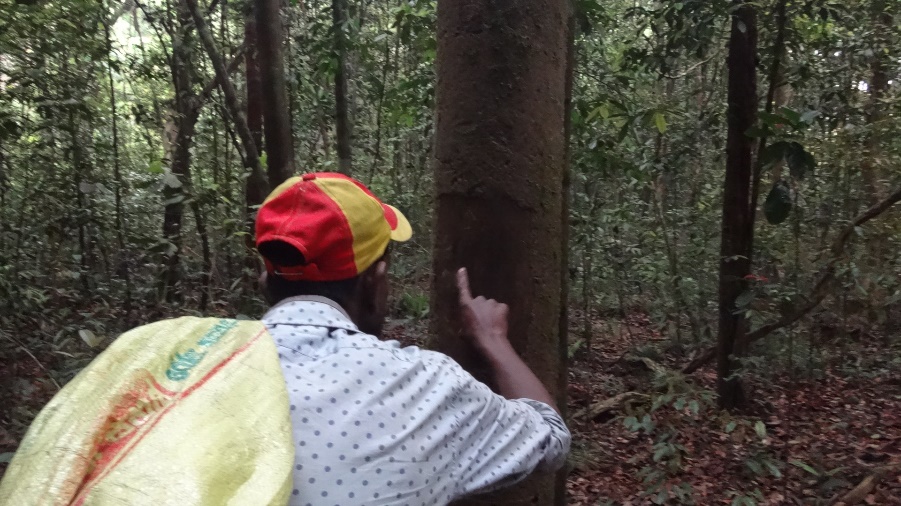
As we walk through the rainforest he points out interesting landmarks and I feel just like I’m back in good ole management plans on a trip to the Yale Myers Forest to learn the signs of past land use histories! We pass old canals dug out to guide water from streams into the rice paddies (Fig. 2 a). The paddies used to be cultivated in the villages here before tea became the main commodity. We pass old tree stumps dated before the restrictions against logging in Sinharaja forest (Fig. 2 b). We stop at the remains of several old kithul cottages, make shift one room structures with space for a kitchen and protection against the elements. Villagers built these small structures where they could boil their kithul sap down into syrup instead of carrying the heavy load all the way back to their homes (it takes about 10 kl of sap to make 1 kl of syrup). Folks here speak fondly of the old days when the whole family would spend the day deep in the forest at their own kithul cottages, boiling sap, foraging for wild herbs and mushrooms, cooking meals, and swimming in the river. Men reminisce of evenings spent in the cottages with friends, singing and drinking raa (kithul toddy) freshly fermented from their tapped trees in the forest. These days new restrictions forbid the construction of cottages in the forest. Their remains tell the story with only four standing wood posts that are all that mark the location of one cottage (Fig. 2 c). At another site Udeyashoka shows me an old grinding
stone that was used to crush herbs and coconut for curries, now grown over with vines and surficial tree roots (Fig. 2 d). At a river crossing farther along he shows me a large, flat (and incredibly heavy) stone that he carried here from another part of the river years ago because of its ideal size and shape for scrubbing laundry. “Our old bathing place” he declares nostalgically.

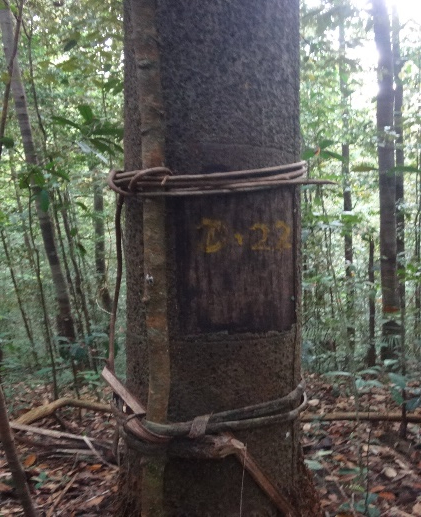
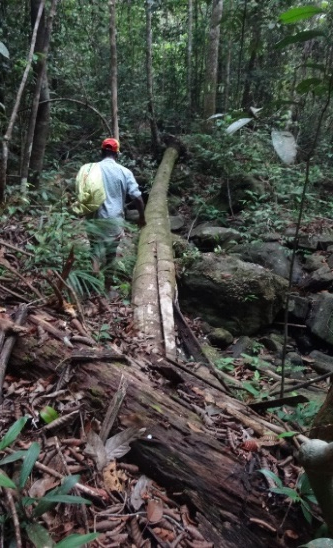
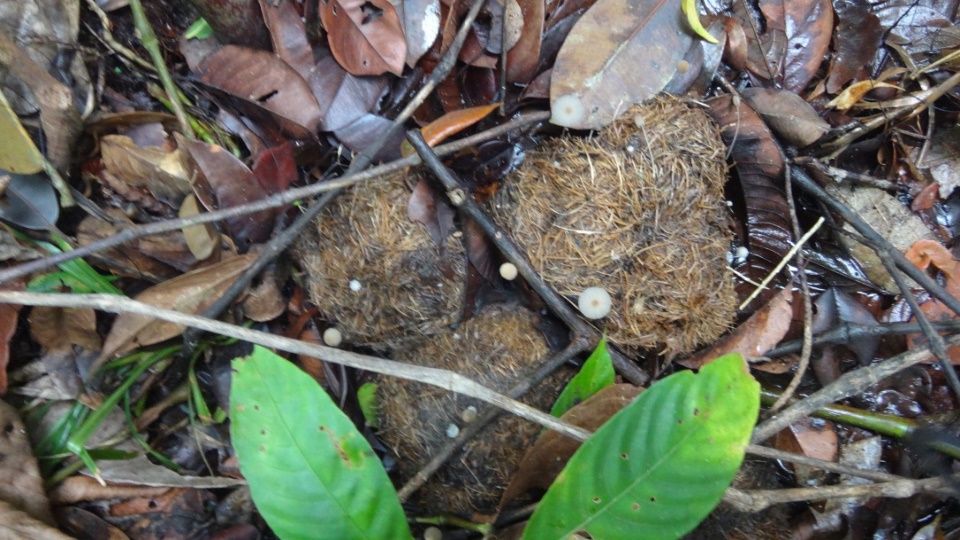
We carry on. We pause at a point in the forest which, to the trained eye is a fork in the path. To me, both the fork and the path itself are invisible, with one group of trees blending right into the next bit of patterned chaos that makes a rainforest. Udeyashoka unhinges one of the two tin jugs from the pole he’s been carrying over his shoulder and places it on the ground. We’ll be coming back this way en route to one of his kithul trees. About 20 minutes later, we approach the site of his second kithul tree and this time place the other jug on the ground right next to it. Here he shows me it’s identification number painted onto the side of the tree where bark has been scraped off. Tapping kithul trees in the forest requires a permit these days. Each tree is numbered and registered (Fig. 3 a, b). When someone identifies a tree they want to tap they must go into the main town to request tapping rights for that tree for one year. An individual can have rights to up to 10 trees, but I haven’t met anyone who taps more than three. Elephants on the other hand seem to go through a high number of kithul trees. They too are attracted to the sweet sap and the soft pulp at the center of the palm. We cross many downed kithul trees; knocked over and pried open by one of the two resident pachyderms in this corner of the Sinharaja forest. In fact, much of our journey is spent following old trails made by elephants – in areas of thick understory these are the paths of least resistance. Udeyashoka points ahead to a wide trail of crushed brush and says “we’ll go the elephant way” and we trudge on over trampled kithul and elephant patties (Fig. 4 a, b).
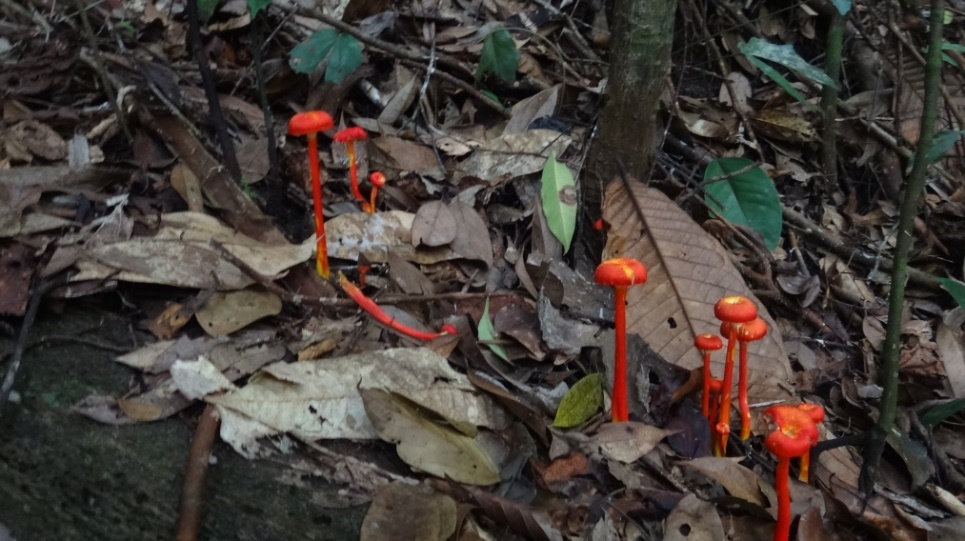
With both sap jugs dropped off we now switch our focus solely towards the hunt. We look for clues. A brilliantly bright orange mushroom isn’t the one we’re looking for, but Udeyashoka picks it out of the ground and says “information mushroom” (Fig. 5a). If these are here, the ones we’re after are close to follow. The vegetation and topography change slightly and I try to make out the differences, but there’s a lot to take in, all the while trying to pick out the leeches stubbornly wedged between my toes. When we get to the “market”, we know immediately. Not by sight but by sound.
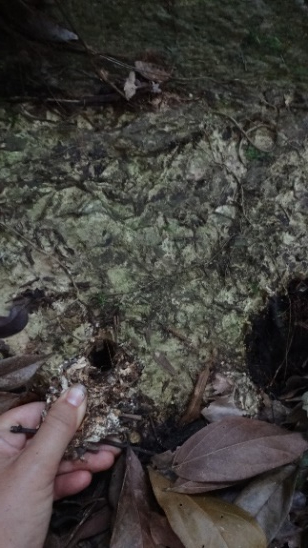
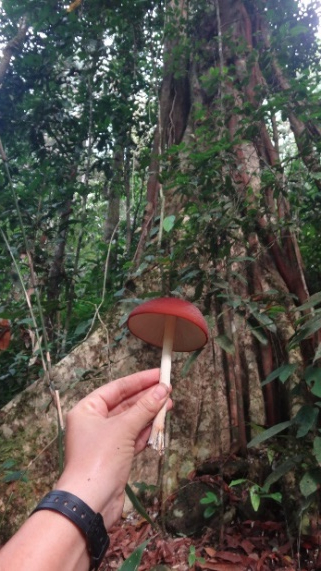
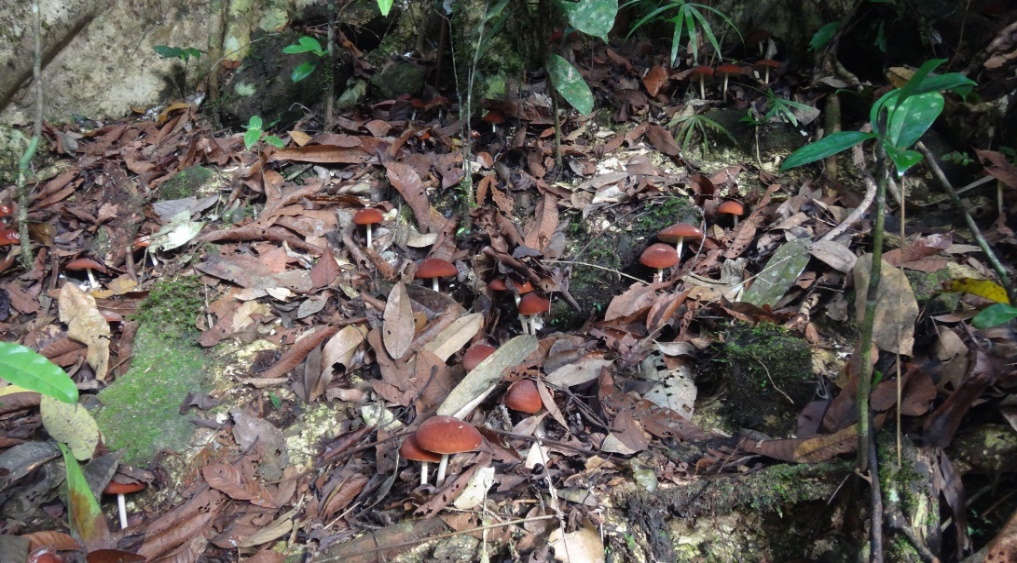
The dense network of mycelium creates a firm mat over the forest floor (Fig. 5b). It’s taut like the leather of a drum stretched over innumerable surficial roots and buttresses. It creates trapped space between the mycelium and the actual soil surface below and makes a thumping sound which resonates in the ground between me and my mushroom hunting partner as soon as we begin to walk over it. We look around and within a few steps we enter a part of the forest dotted with hundreds of little brown mushrooms (Fig. 6 a, b). I feel that same childlike grin creep over my face, the one everyone in the village has been wearing the past weeks, and we get to work. There are no restrictions or permits required to harvest mushrooms. The mycelium mats are dense and seemingly healthy and we are harvesting only the fruit. There are so many, it seems like a sustainable enough practice. But who knows. This too may change in the coming years.

We pluck all we need from the mushroom “market” and venture on to another. We visit three known sites and discover a new one along the way (a happy new bragging point when we meet folks back in the village). Some villagers cut out portions of the mycelium mat and quite successfully transplant them to forested patches of their own homesteads.
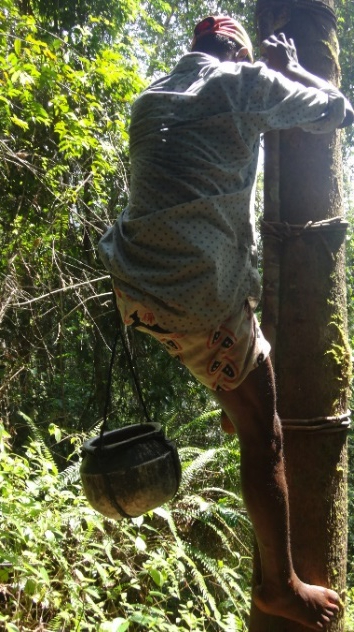
With a full sack, we’ve now got to get back to the kithul trees before last night’s collection jugs overflow (Fig. 7a). So we hightail it to both palms, eat a quick breakfast by a stream, and make our way back out of the forest. The contents of our day of foraging comprises sweet tree saps and wild mushrooms. It gives me that northeastern feeling again and I think back to agroforestry schemes of sugar maples over shiitake mushroom understories. Two universally luxurious non-timber forest products. We cross the river (Fig. 7b) and back into Pitakele. Udeyashoka with two large jugs of fresh kithul sap over his shoulder and I with the Santa Klaus-like sack of mushrooms over mine.
 slpfc.org