
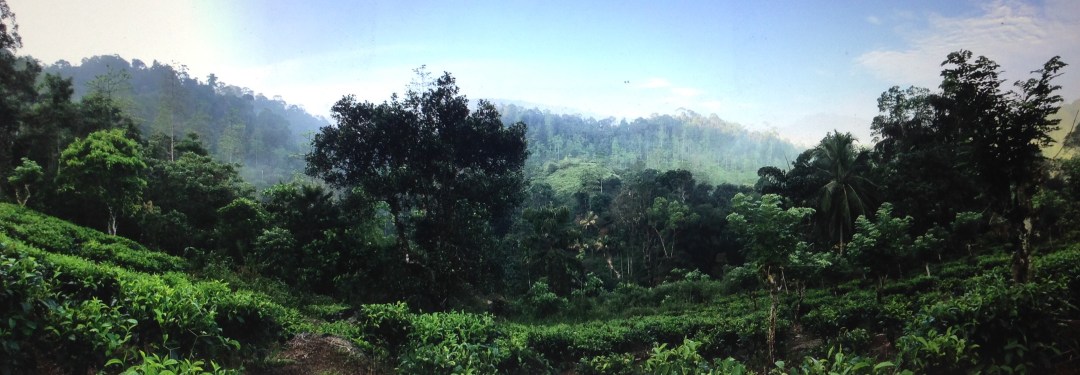
- 1875: Sinharaja in declared a forest reserve by the British Colonial government and is to be managed at that time within the Department of Agriculture.
- 1970 – 1977: The Sri Lankan government provides a logging concession to a Canadian firm managed by the Sri Lankan State Timber Corporation. Selective timber harvesting is conducted.
- 1977: Pressure from environmentalists and academics on the negative impacts of timber harvesting causes a new government to suspend the logging activities.
- 1978: Sinharaja Forest is declared a UNESCO Man and the Biosphere Reserve
- 1980: The first research plots are placed within the Sinharaja to measure tree composition and structure by Nimal and Savitri Gunatilleke. (Gunatilleke and Gunatilleke, 1980. Sri Lanka Forester)
- 1986 – 1989: Neela de Zoysa, under supervision of Savitri and Nimal Gunatilleke, undertakes an evaluation of the regeneration of the logged forest. (de Zoysa et al., 1986; 1988; 1989, Sri Lanka Forester)
- 1988: J. Maheswaran begins some of the first soil studies in the region with Nimal Gunatilleke. (Maheswaran and Gunatilleke, 1988, Biotropica)
- 1985 – : Nimal and Savitri Gunatilleke commence phenology and reproductive biology studies on economically important trees and shrubs with a team of masters students in collaboration with Peter Ashton and sponsored by a USAID Science and Technology grant. (See Dayanandan et al., 1990)
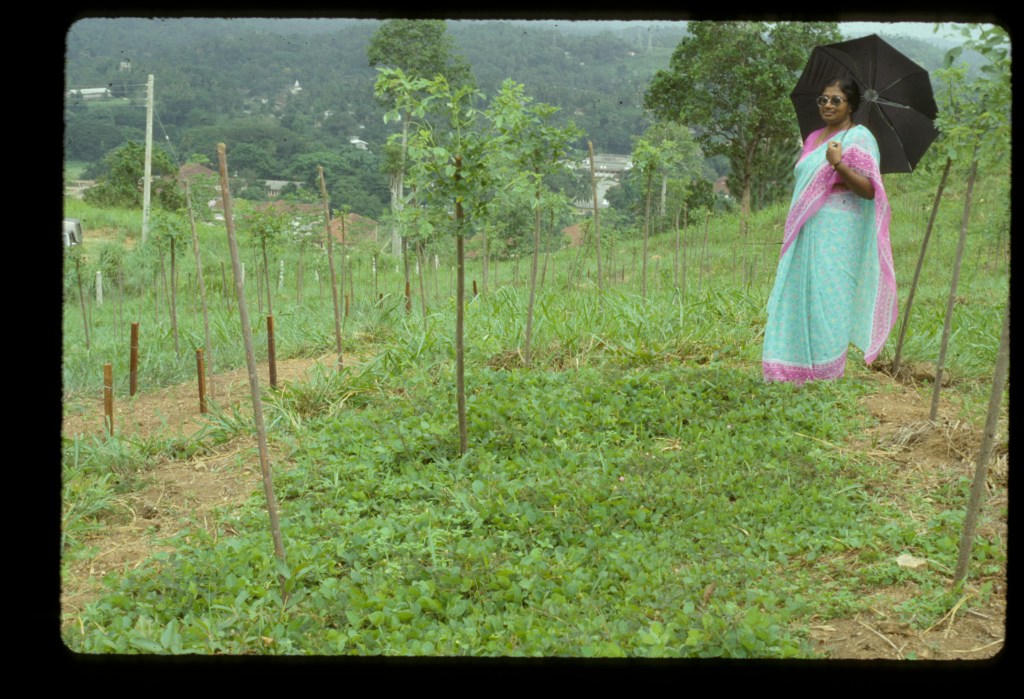
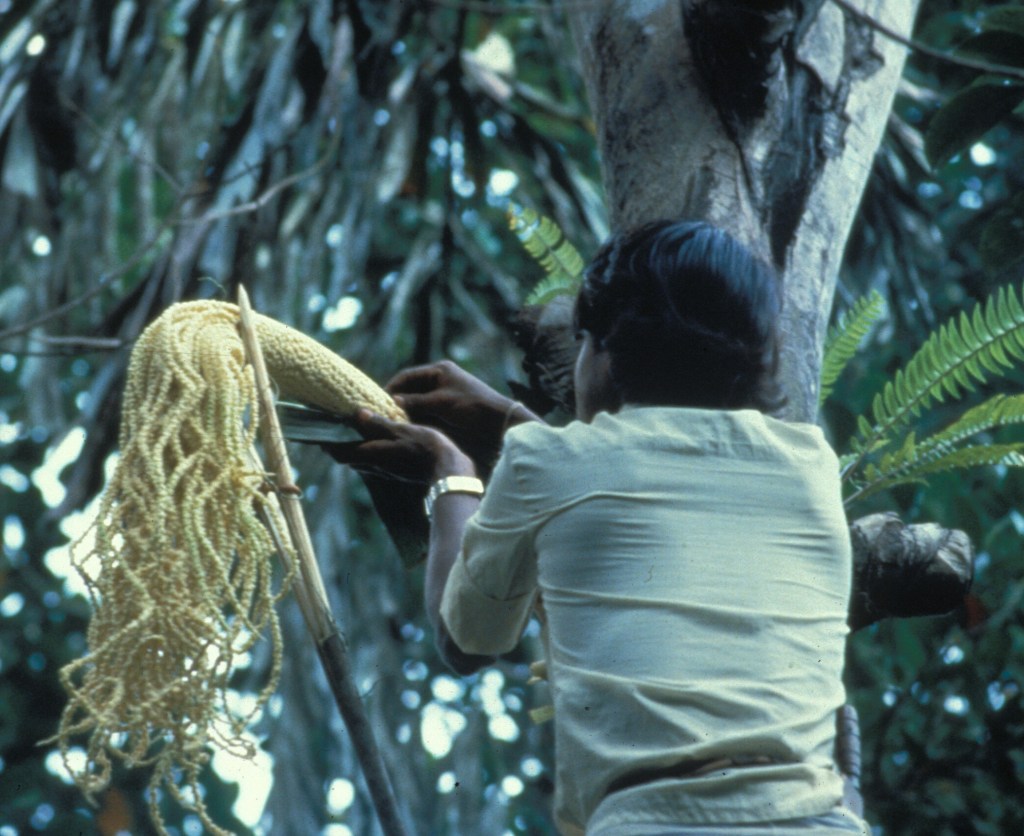
- 1985 – : Mark Ashton of Yale University begins seedling studies on Shorea in collaboration with Nimal and Savitri Gunatilleke. (Ashton and Berlyn, New Phtol. 1992; Ashton Forest Ecol & Mgt, 1985; Ashton et al., 1985, J. Trop. Ecol.)
- 1985 – : B.M.P. Singhakumara of the University of Sri Jayewardenapura begins to study the ecology and taxonomy of Vitex.
- 1988: Sinharaja Forest Reserve is named UNESCO World Heritage Site
- 1991: Work begins to establish long-term plots on 25 hectares of land within and surrounding the Sinharaja Forest Reserve as part of the Smithsonian ForestGeo plot network and is funded through several MacArthur grants (1991-2004) provided to Mark Ashton and Nimal and Savithri Gunatilleke. The first census is completed in 1993. (Gunatilleke et al., 2004 WHT Publications; Gunatilleke et al., J. Trop. Ecol. 2006)
- 1991 – : Mark Ashton, Nimal and Savithri Gunatilleke, and Sunil Gamage commence studies in forest restoration in collaboration with The Sri Lankan Forest Department and is funded by Norwegian Aid through the University of Peradeniya in collaboration with Yale University. These studies focus on the use of Caribbean pine as a pathway to restore native forests. (Ashton et al., J. Appl. Ecol. 1997; Forest Ecol & Mgt, 1998)
- 1992 – 2004: Mark Ashton, Harshi Gamage, and BMP Singhakumara commence seedling ecophysiology studies with Kumudini Pandithirathna and several master students at the University of Sri Jayewardenapura and Yale University. This work culminates in over 60 species being studied in relation leaf adaptation to shade. (Gamage et al., Bot. J. Linnean Soc., 2003; J. Trop. Ecol., 2004; Singhakumara et al., Forest Ecol & Mgt, 2004)
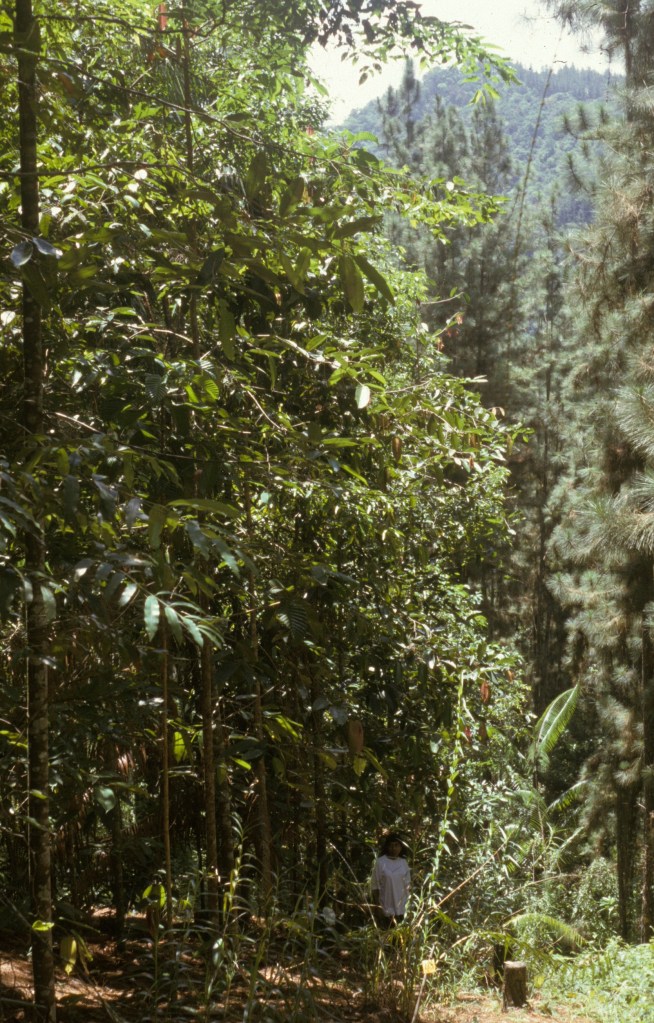
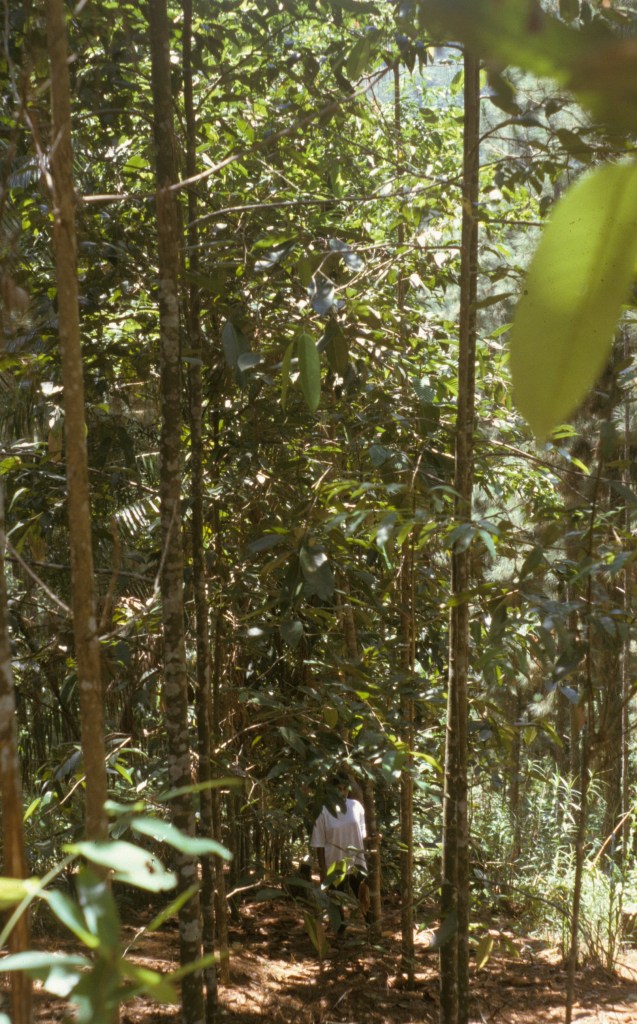
- 1993 – : Mark Ashton and BMP Singhakumara, sponsored by MacArthur, begin the first restoration studies on Kekilla fernlands, focusing on releasing buried seed banks and plantings. (Cohen et al., Rest. Ecol., 1995)
- 1996 – : Sisira Ediriweera, BMP Singhakumara and Mark Ashton, sponsored by MacArthur, establish annually monitored plots studying the recruitment and survival of seedlings in the understory of the forest. (see: Ashton et al., Ecosphere, 2018)
- 1997 – 1998: The second census of the original forest plots set up by Nimal and Savitri Gunatilleke in 1978 is undertaken.
- 2000: BMP Singhakumara and Mark Ashton establish the Sri Lanka Program in Forest Conservation (SLPFC) for the purpose of demonstrating forest conservation and sustainable management using the knowledge being generated through the research in the region.
- 2000: SLFPC purchases a twenty-acre parcel of land located in the town of Pitakele using gifts to the organization. The property, an abandoned cinnamon plantation bordering both the Sinharaja Forest Reserve and Morapitiya and adjacent to the village of Pitekele, is selected for it’s high conservation value and suitability for hosting demonstration programs. The range of vegetative cover include Kekilla fern scrubland, secondary forest, riparian forest, and logged-over primary forest, and provides an ideal labratory for research into forest restoration.
- 2001: A gift is secured to build a research station at the newly acquired site.
- 2005: SLPFC Board members begin preparing for the construction of the research station. Plans for the building are drawn up by (insert name), a well-respected, Sri Lankan architect.
- 2007: The property survey takes place.
- 2008: Construction of the research station begins, a logistically challenging endeavor as the home site was undeveloped and transport of machinery and material required road improvement and construction. While much of the labor for both the road, and the building of the research station is contracted to residents of Pitakele, skilled carpenters and masons are brought in from a neighboring city.
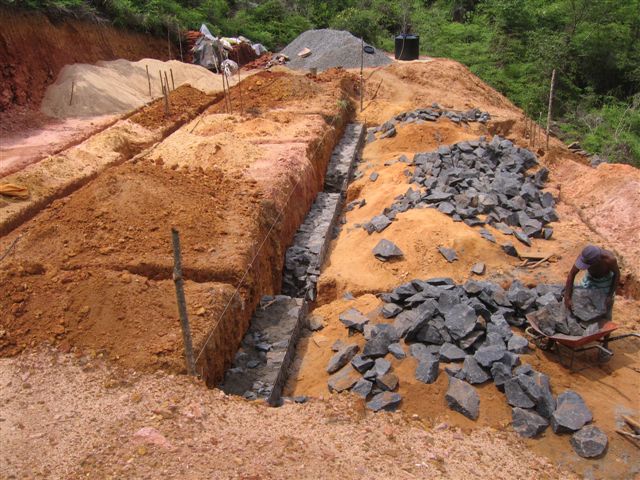
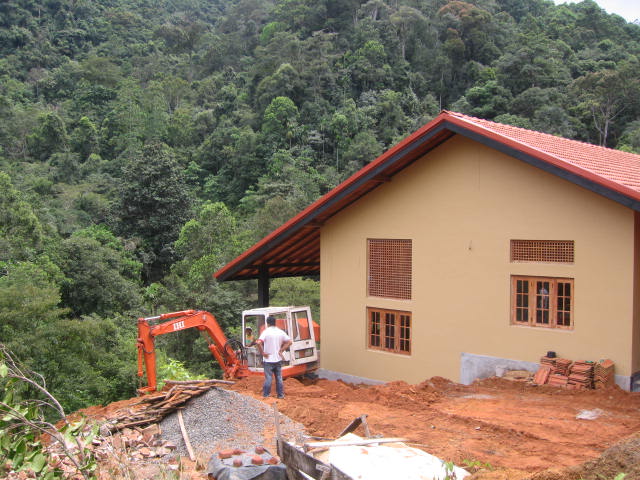

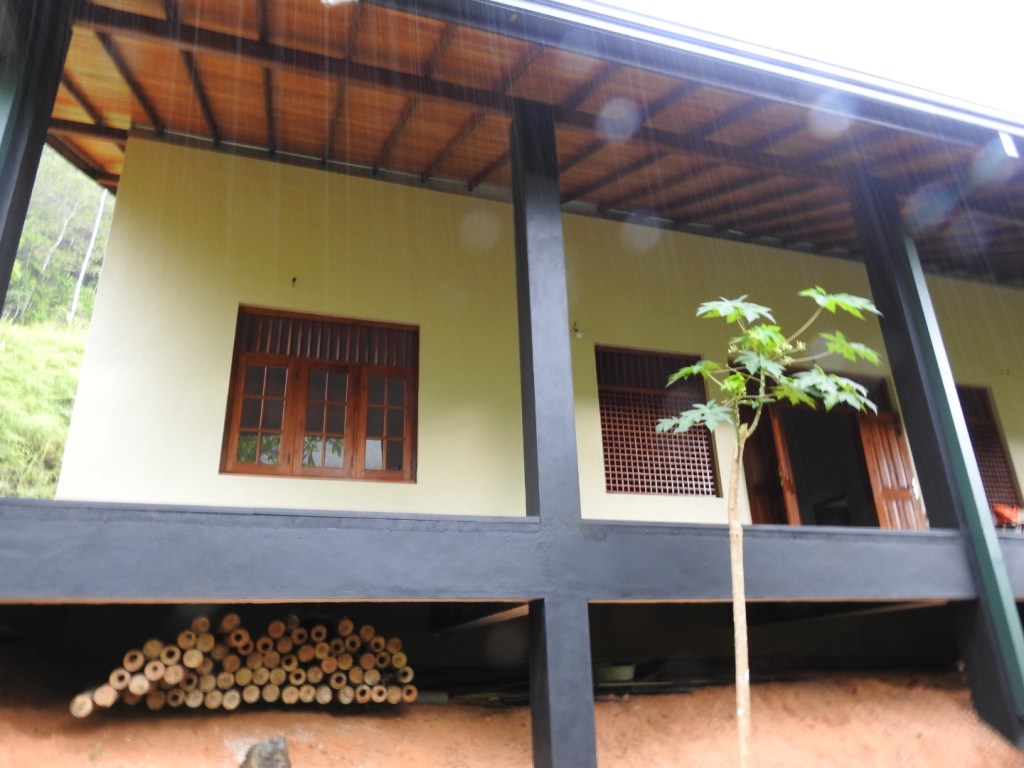
- 2009: Construciton of the research station is completed
- 2014: A research fellowship is created at the Tropical Resources Institute of Yale University to facilitate collaboration between Yale and SLPFC, as well as to sponsor projects based out of the research station.
- 2014: SLPFC is endowed by contributions from the Britain Scholarship Fund and an education fund created by friends of the SLPFC. The funds are used to support Sri Lankan students conducting research and education at SLPFC and to support the core administrative functions of the organization.
- 2015: First Yale sponsored SLPFC fellows start their research projects
- 2016: The Tree Garden Project and Demonstration Area is started, and the first three fellows travel from Yale University to Sri Lanka to begin the program.
- 2017 – 2018: The third census of the original research plots established by Nimal and Savitri Gunatilleke takes place under the guidance of Sisira Ediriweera. (Ediriweera et al., Forest Ecol & Mgt., 2020)
- 2020 – : Akshay Surendra and David Woodbury, under the guidance of Liza Comita, Sisira Ediriweera, Mark Ashton, and BMP Singhakumara, begin their studies on seedling ecology and forest fragmentation.

 slpfc.org